The price of a monitored cycle depends on whether the clinic bills each ultrasound separately or bundles a planned series, and the scan count depends on how quickly your follicle develops. By comparing inclusions, preparing for the right scan type and asking how follow-ups are triggered, you can budget more accurately and avoid missing the narrow treatment window.
Key takeaways
- Budget for serial scans, reporting, medicines and specialist review separately.
- Most cycles use several scans, with timing adjusted to follicle growth.
- Ask whether the quoted fee includes scans, reports and consultation.
- Book early in your menstrual cycle to confirm the first scan date.
What does follicular monitoring cost in Navi Mumbai include?
There is no single standard price for follicular monitoring cost in Navi Mumbai because scan numbers, medicines, reporting and specialist review differ by cycle. A short serial-scan cycle is commonly budgeted in the low-thousands of rupees, but this is a practical estimate, not a fixed tariff.
| Option | What the quote means | What to confirm |
|---|---|---|
| Per-scan | You pay for each ultrasound separately | Price for extra scans and review after each result |
| Complete-cycle package | Several scans are bundled for one menstrual cycle | Included scan count, validity period and excluded services |
Ask whether the price includes a transvaginal ultrasound, radiologist’s or fertility specialist’s interpretation, same-day reporting, follow-up review and repeat scans when the follicle remains immature. A low per-scan price can cost more if growth is slow and additional visits are charged separately.
Consultation, letrozole, clomiphene, gonadotropins, hormone blood tests, an ovulation-trigger injection and pregnancy testing are often billed separately. Confirm this before booking.
For an unused package scan, ask:
- Is it refundable if monitoring stops early?
- Can it transfer to the next cycle?
- What deadline applies for requesting a refund or transfer?
- Does a missed appointment count as a used scan?
- Are extra scans charged at the package rate or the standalone rate?
- Will cancellation, illness or a clinician-advised cycle cancellation change the rule?
How many scans are needed, and when does the schedule change?
An unmedicated cycle may need only a few scans: a baseline scan around cycle day 2–5 when treatment planning requires it, followed by a first growth scan around day 8, 9 or 10. Later appointments depend on the first findings, your usual cycle length, previous response and any fertility medication.
Once a leading follicle is developing, scans commonly occur every 1–2 days:
- Repeat within 24 hours if growth is rapid or an ovulation-trigger decision is close.
- Repeat within 48 hours if growth is slower or the follicle remains immature.
- Add scans when several follicles grow unevenly, because irregular development can change the timing and medication plan.
- Continue assessment when no dominant follicle appears; the clinician may wait, order blood tests or revise the cycle plan.
Letrozole and clomiphene cycles can require more scans than an unmedicated cycle. Injectable gonadotropins often require still closer ultrasound monitoring and blood tests to track response and reduce the risk of excessive follicle development.
Slow growth can shift the next scan later. Rapid growth can shorten the window for timed intercourse, insemination or a trigger injection. Missing a scheduled scan by several days can mean missing the short interval around ovulation, making treatment timing less precise.
When arranging a follicular study in Navi Mumbai, give the clinic your cycle day, usual cycle length, medicines and previous scan instructions.
What happens at a follicular monitoring appointment?
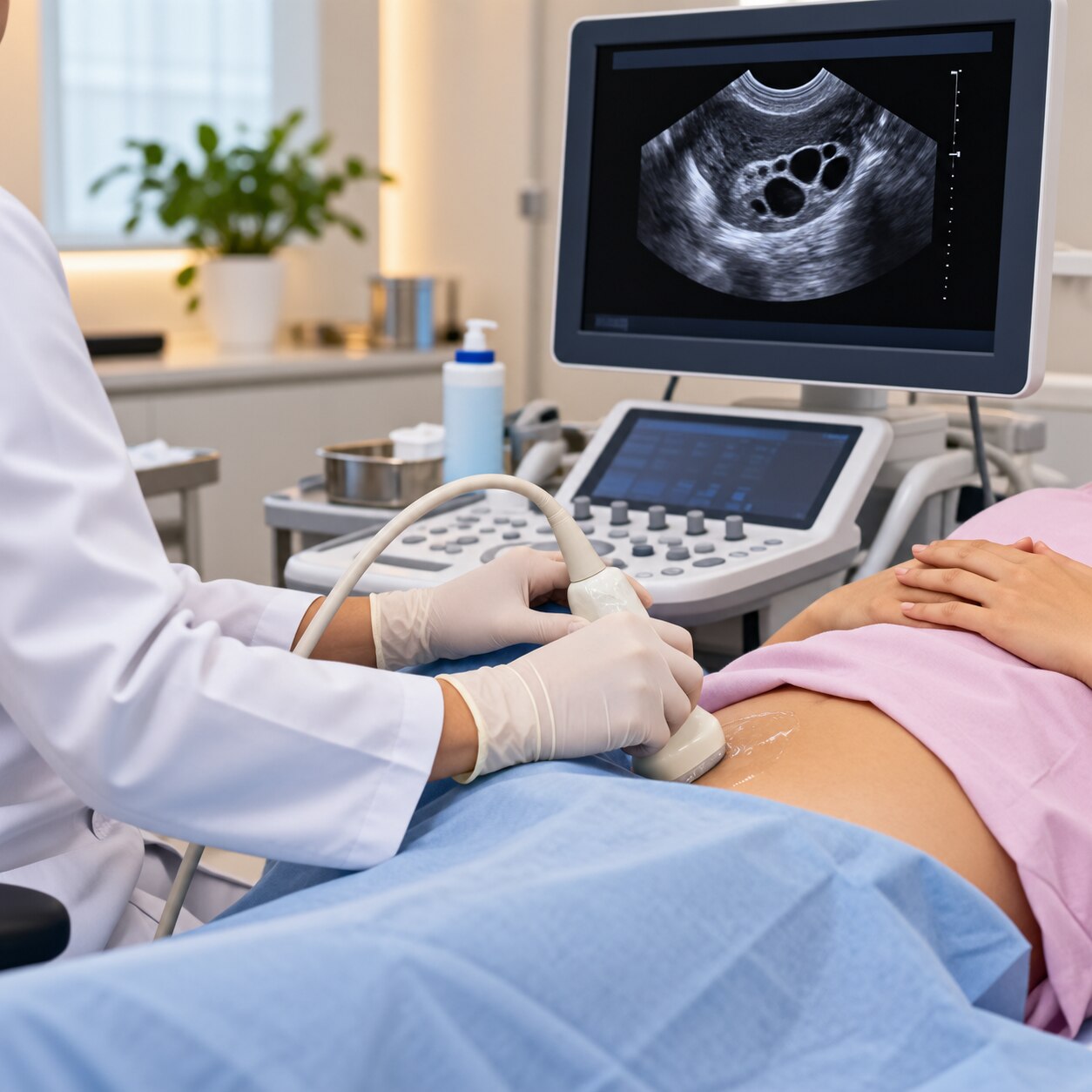
At a follicular monitoring appointment, you check in, confirm your cycle day and medicines, follow bladder instructions, and undergo a pelvic ultrasound. The scan is usually brief, but appointment time also includes positioning, image review and instructions about the next visit.
| Scan type | Bladder preparation | What it shows |
|---|---|---|
| Transvaginal ultrasound | Empty bladder | Clearer views of small follicles and the ovaries |
| Abdominal pelvic scan | Full bladder | A broader pelvic view, but it can be insufficient for detailed follicle monitoring |
If you have not had vaginal intercourse, tell the clinic when booking. The clinician can discuss an abdominal approach or another suitable examination instead of assuming an internal scan is appropriate.
Period bleeding does not automatically prevent a baseline transvaginal scan. Report heavy bleeding, significant pain, unusual discharge, fever, or other infection symptoms before attending, because these details can change the examination plan.
During a transvaginal scan, a covered probe is inserted gently into the vagina. Expect pressure or mild discomfort, not a requirement to tolerate pain; ask the clinician to pause or stop if it hurts. When comparing a follicular scan clinic in Navi Mumbai, ask whether the report and next-scan instructions are provided the same day.
What do the scans measure, and how do findings guide treatment?
The report measures follicle development, the uterine lining and signs that ovulation has occurred. Look for:
- The leading follicle’s size in millimetres; a dominant follicle often grows about 1–2 mm per day after selection.
- The number and sizes of other follicles, including whether several are growing together.
- Endometrial thickness in millimetres and its ultrasound appearance.
- Post-rupture findings, such as follicle collapse, altered follicle appearance or free fluid behind the uterus.
Many treatment protocols consider roughly 18–24 mm a mature follicle range, but size alone does not prove ovulation. A follicle can fail to rupture, so the clinician may combine later scan findings with cycle timing, ovulation symptoms or a mid-luteal progesterone test.
These findings guide the next decision: advise timed intercourse, schedule intrauterine insemination or give an ovulation-trigger injection. In stimulated cycles, serial scans also limit excessive follicle development.
With letrozole, clomiphene or gonadotropins, the clinician may change, cancel or postpone the trigger if several mature follicles raise multiple-pregnancy risk or injectable treatment raises concern about ovarian hyperstimulation syndrome.
Follicular monitoring in Navi Mumbai does not test tubal openness or sperm parameters. It also does not measure AMH or ovarian reserve; those require different assessments, including ovarian-reserve blood tests or antral follicle counting.
How should you book a follicular monitoring cycle in Navi Mumbai?
Give the clinic the first day of your last menstrual period, your usual cycle length, current fertility medicines and any previous scan or trigger-injection instructions. Use this booking script: “I want to book follicular monitoring this cycle.
Do you reserve only the first scan, or can you arrange a linked series and hold likely follow-up slots?”
“Book follicular monitoring” can mean either option. Ask how unused scans are handled: request the cancellation deadline and confirm whether a paid scan can be transferred or refunded.
1. Ask who reviews each scan: a radiologist, fertility specialist or another clinician. Confirm when the report and measurements will be released, especially if you need a same-day treatment decision.
2. Ask whether the same clinician decides the next scan and how quickly the clinic will contact you. Clarify the plan if follicle growth is slow, the follicle remains immature or no dominant follicle appears.
3. Compare the quote by inclusions, not just price. Check whether it covers the transvaginal scan, interpretation, same-day reporting, follow-up review and repeat scans requested before maturity.
4. Confirm appointment timing, likely follow-up availability and the process for changing a slot. Missing monitoring by several days can obscure the short interval around ovulation.
Parulekar Hospital is one Navi Mumbai provider you can contact with these exact questions. Choose the clinic offering clear scheduling, prompt reporting and treatment coordination, not simply the lowest single-scan price.
Related service
Fertility (IVF / ART) Follicular Monitoring is a simple ultrasound-based procedure used to track the growth and development of ovarian follicles during a menstrual cycle. View service → |
Frequently asked questions
What does follicular monitoring cost in Navi Mumbai include?
The cost can include serial ultrasound scans, scan reports, medicines and specialist review. Ask for an itemised estimate because inclusions differ by cycle.
How many scans are needed for follicular monitoring?
The number depends on follicle growth and treatment response. A short serial-scan cycle is commonly budgeted in the low-thousands of rupees, but the final number can change during the cycle.
What happens at a follicular monitoring appointment?
The clinician performs an ultrasound scan, records follicle development and reviews the findings to decide the next scan or treatment step.
What do follicular monitoring scans measure?
Scans assess follicle growth and help identify the timing of ovulation. Findings guide decisions about scan timing and treatment.
How should I book follicular monitoring in Navi Mumbai?
Ask the clinic which cycle day to attend, how many scans the estimate covers, whether medicines and consultation are separate, and when reports are issued.
Keywords