The right operation depends on what must be removed, whether cancer is suspected, your fertility plans, the size and position of the uterus, and the safest surgical route. By the end, you will know how to compare hysterectomy types, identify uterus-preserving alternatives, and prepare for a focused consultation.
Key takeaways
- Total hysterectomy removes the uterus and cervix; subtotal surgery leaves the cervix.
- Surgical routes include abdominal, vaginal, laparoscopic and robotic procedures.
- Cancer, prolapse, fibroids and adenomyosis can require different operations.
- Ask about fertility goals, ovarian conservation, recovery time and alternatives before deciding.
What does each hysterectomy type remove?
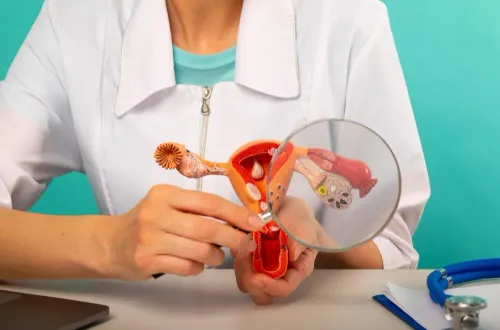
A hysterectomy’s anatomical type depends on which parts of the uterus and cervix are removed. These are the key differences:
| Type | What it removes | Important consequence |
|---|---|---|
| Total hysterectomy | Uterine body and cervix | Ends menstruation and the ability to carry a pregnancy |
| Subtotal or supracervical hysterectomy | Uterine body; cervix remains | Does not preserve fertility; cervical screening continues, and occasional cyclical bleeding can occur |
| Radical hysterectomy | Uterus, cervix, parametrium, upper vagina and usually pelvic lymph nodes | Mainly used for selected cancers, not routine treatment for fibroids, heavy bleeding or prolapse |
The fallopian tubes and ovaries are separate decisions from the hysterectomy itself. Salpingectomy removes one or both tubes. Oophorectomy removes one or both ovaries. Salpingo-oophorectomy removes a fallopian tube and its ovary together. Removing both tubes while retaining healthy ovaries is called bilateral salpingectomy.
Removing both healthy ovaries before natural menopause causes immediate surgical menopause, so it needs an individual risk-benefit discussion. Retained ovaries can continue producing hormones until natural menopause, although ovarian function can decline earlier after surgery. The hysterectomy surgery options should therefore specify separately whether the cervix, each tube and each ovary will remain.
How do abdominal, vaginal, laparoscopic and robotic routes compare?
For a feasible benign condition, vaginal hysterectomy usually offers the least disruptive recovery because it avoids abdominal incisions and often shortens hospitalisation and healing. The safest route still depends on your anatomy, disease pattern, previous operations and the surgeon’s experience.
| Route | Incision and recovery | When it may fit |
|---|---|---|
| Vaginal | No abdominal incision; often less pain, shorter hospitalisation and faster recovery than abdominal surgery | A benign condition with a suitably sized, mobile uterus and safe vaginal access |
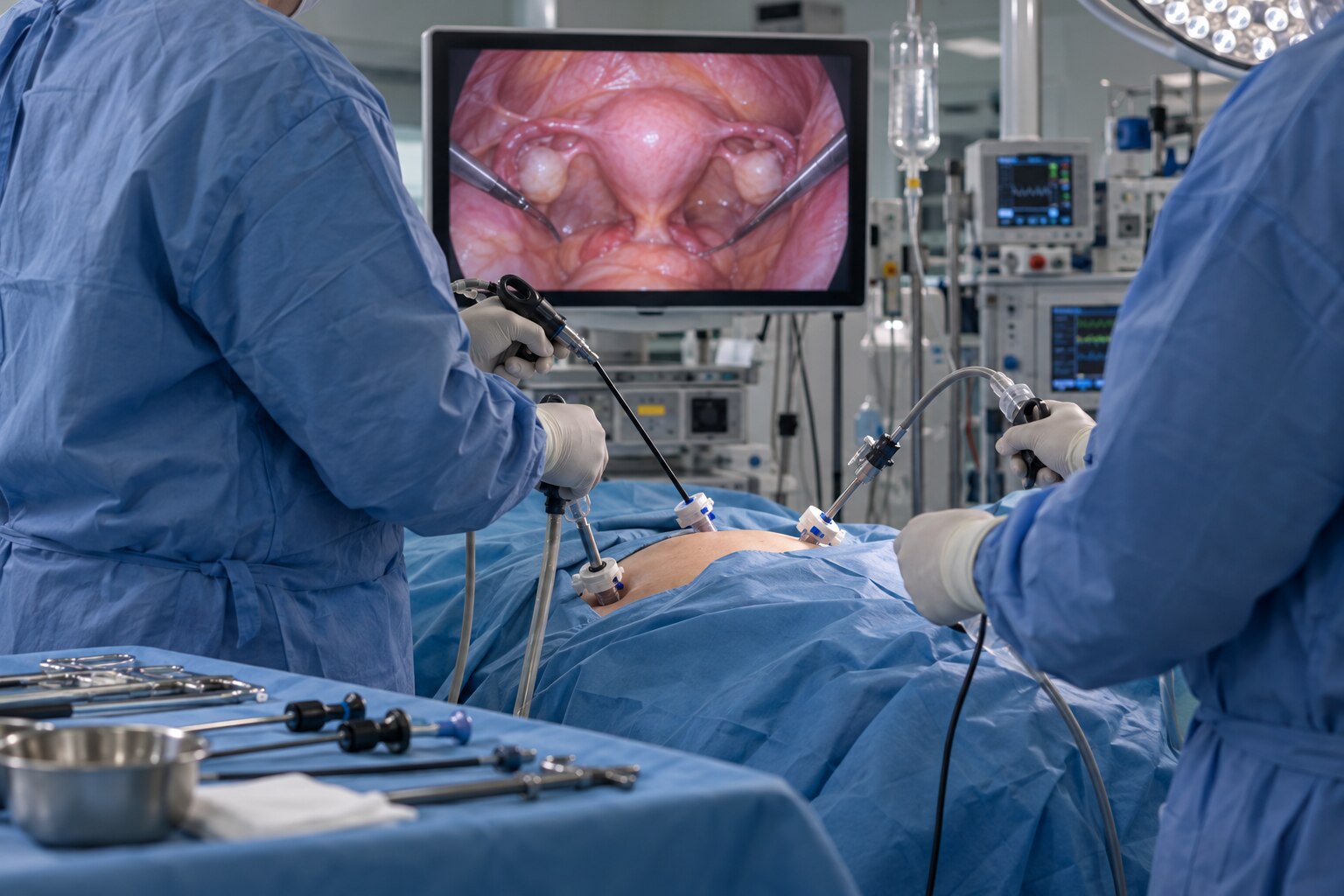
| Laparoscopic | Several small abdominal incisions; usually faster recovery than abdominal surgery, but the operation can take longer | Benign disease or selected complex cases when minimally invasive access is safe |
| Robotic-assisted | Small abdominal incisions using robotic instruments; recovery is that of laparoscopic surgery, not a separate anatomical operation | Laparoscopic surgery requiring enhanced instrument control, where the hospital has the system and trained team |
| Abdominal | One larger abdominal incision; more pain and a longer recovery | A very large uterus, extensive adhesions or endometriosis, suspected cancer staging, or unsafe minimally invasive access |
A laparoscopic operation can require conversion to an open abdominal procedure if bleeding, adhesions, anatomy or cancer findings make continuation unsafe. That possibility belongs in your consent discussion.
Compare uterine size, prior abdominal operations, disease outside the uterus, cancer concerns, surgeon experience and hospital resources—not the diagnosis name alone. Ask which route gives adequate access without creating avoidable risk.
Which operation fits fibroids, adenomyosis, endometriosis, prolapse or cancer?
Fibroids, adenomyosis, endometriosis, prolapse and cancer require different operations. Fertility plans, symptom severity, disease location and cancer risk determine the best fit.
| Condition | Usual operation or option | What changes the decision |
|---|---|---|
| Fibroids | Myomectomy or hysterectomy | Myomectomy preserves pregnancy potential; number, size and location guide its complexity. Hysterectomy is definitive when childbearing is complete, symptoms are severe and other treatments are unsuitable. |
| Adenomyosis | Hysterectomy or uterus-preserving treatment | Hysterectomy definitively removes the diseased uterus. Medicines and other uterus-preserving options depend on fertility plans and disease severity. |
| Endometriosis | Hysterectomy, with separate ovarian discussion | Pain can persist because lesions outside the uterus remain. Removing ovaries causes surgical menopause and is a separate risk-benefit decision. |
| Prolapse | Pessary, pelvic-floor care or surgery | A pessary or pelvic-floor treatment avoids surgery; uterus-preserving prolapse surgery may suit selected patients. |
| Uncontrolled bleeding | Medical treatment, ablation or hysterectomy | The cause, anaemia, uterine anatomy and pregnancy plans matter. Hysterectomy is definitive when other treatments fail or are unsuitable. |
| Cancer | Cancer-specific hysterectomy and staging | Suspected or confirmed cancer changes the operation and referral pathway. Radical hysterectomy is not routine for benign disease. |
Discuss bleeding, infection, bladder, ureter or bowel injury, blood clots and anaesthetic complications before surgery. Risk depends on the route and your health, including obesity, previous abdominal surgery, adhesions, endometriosis and cancer; a minimally invasive operation can still require conversion to abdominal surgery.
When is treatment other than hysterectomy the better fit?
A hysterectomy permanently removes the uterus, so a reversible or uterus-preserving option is often better when symptoms are mild, fertility matters, or the diagnosis remains uncertain.
| Option | Best fit | Important limitation |
|---|---|---|
| Monitoring | Small, stable fibroids or mild symptoms | Reassess if pain, bleeding or uterine growth increases |
| Medicines or levonorgestrel intrauterine system | Heavy menstrual bleeding | May not control bleeding from a large structural lesion |
| Endometrial ablation | Bleeding from the uterine lining when future pregnancy is not wanted | Not suitable for a large cavity-distorting fibroid; pregnancy must be avoided afterward |
| Uterine artery embolisation | Fibroids when shrinking the uterus without removal is preferred | Discuss pregnancy plans with a specialist because future fertility outcomes are uncertain |
| Myomectomy | Fibroids when future pregnancy matters | Recurrence is possible; assess number, size, location and surgical complexity |
| Pessary | Prolapse without surgery | It supports the prolapse but does not correct the underlying weakness |
Myomectomy is often the more suitable fibroid operation for someone planning pregnancy. The safest approach depends on the fibroids’ number, size and location, plus blood loss, anaemia, surgical access and recurrence risk.
Review fertility plans, symptom burden, failed treatments, anaemia, age, cancer risk and personal preference before choosing definitive surgery. If symptoms are tolerable, monitoring allows time to decide. Suspected cancer requires specialist assessment rather than delaying indicated treatment for a uterus-preserving option.
What should you ask during a hysterectomy procedure consultation in Navi Mumbai?
1. Ask, “What exact diagnosis justifies surgery?” Request the imaging findings, examination results and implications of prior operations. Ask whether cancer is suspected, and whether monitoring, medication, an intrauterine system, embolisation, ablation, pessary treatment or myomectomy remains reasonable.
2. Decide each structure separately: the cervix, both fallopian tubes, the right ovary and the left ovary. Ask whether opportunistic bilateral salpingectomy is appropriate, how retaining the ovaries affects ovarian function, and what removing healthy ovaries before natural menopause means for surgical menopause, bone, heart and sexual health.
3. Request the proposed route—vaginal, laparoscopic, robotic-assisted or abdominal—plus the expected hospital stay, pain plan, return-to-work estimate and risk of conversion to an open operation. Ask for the surgeon’s local rates of bleeding, infection, blood clots, bladder, ureter, bowel and anaesthetic complications.
4. If you are comparing hysterectomy options in Navi Mumbai, hysterectomy types in Navi Mumbai or uterus removal surgery in Navi Mumbai, ask whether the surgeon routinely performs vaginal and laparoscopic procedures. Confirm how cancer referrals and frozen-section assessment are arranged, and which emergency and follow-up services remain available after discharge.
5. Parulekar Hospital can be one local setting for this discussion, but confirm the operating surgeon, route, facilities and follow-up plan directly. Seek a second opinion when the indication is uncertain or the proposed operation is irreversible.
Related services
Procedures & Surgeries Hysterectomy is a surgical procedure to remove the uterus, recommended for conditions such as fibroids, abnormal bleeding, endometriosis, uterine... View service → |
Procedures & Surgeries Myomectomy (Fibroids) Treatment Myomectomy is a specialized surgical procedure to remove uterine fibroids (non-cancerous growths) while preserving the uterus. View service → |
Frequently asked questions
What does each hysterectomy type remove?
A total hysterectomy removes the uterus and cervix. A subtotal, or supracervical, hysterectomy removes the uterus but leaves the cervix. A radical hysterectomy removes the uterus, cervix, nearby tissues and sometimes the upper vagina for selected cancers. The ovaries and fallopian tubes are separate decisions.
How do abdominal, vaginal, laparoscopic and robotic hysterectomy routes compare?
Abdominal surgery uses a larger incision and suits a very large uterus or complex disease. Vaginal surgery removes the uterus through the vagina and avoids an abdominal incision, making it useful for many prolapse cases. Laparoscopic surgery uses small abdominal incisions and a camera. Robotic surgery is also minimally invasive, with surgeon-controlled instruments; access, recovery and suitability depend on your anatomy and diagnosis.
Which hysterectomy fits fibroids, adenomyosis, endometriosis, prolapse or cancer?
Fibroids and adenomyosis often require total hysterectomy when symptoms are severe and childbearing is complete. Endometriosis may require removal of visible disease alongside hysterectomy. Vaginal hysterectomy commonly suits uterine prolapse. Cancer requires staging-based planning, which can include radical hysterectomy and lymph-node assessment.
When is treatment other than hysterectomy the better fit?
If you want future pregnancy or symptoms are manageable, discuss medicines, a levonorgestrel intrauterine system, myomectomy, uterine artery embolisation, endometrial ablation or endometriosis surgery. The right option depends on the diagnosis, uterus size, cancer risk and fertility plans.
What should you ask during a hysterectomy procedure consultation in Navi Mumbai?
Ask which organs will be removed, why that route fits your condition, whether the ovaries and cervix will remain, expected hospital stay and recovery, risks, pathology testing, fertility effects and non-surgical alternatives. Request the surgeon’s plan for unexpected findings and ask which records or imaging to bring.
Related service
Procedures & Surgeries Laparoscopy and hysteroscopy are advanced minimally invasive procedures used to diagnose and treat various gynecological conditions. View service → |
Keywords