Choosing embryo freezing involves more than comparing a laboratory fee. You need to understand how embryos are created and assessed, how vitrification and storage work, what consent documents control their future use, and which clinic records and outcomes to request before signing.
Key takeaways
- Confirm how stimulation, scans, trigger injection and egg retrieval are scheduled.
- Ask whether the clinic uses vitrification and how thawing outcomes are recorded.
- Compare embryo, egg and sperm freezing against your treatment timeline and goals.
- Request storage fees, consent terms, renewal dates and cancellation conditions in writing.
From ovarian stimulation to a frozen embryo: what happens at each stage
The pathway starts with ovarian stimulation: injectable gonadotrophins encourage several follicles to develop instead of one. Ultrasound scans and blood tests, including estradiol measurements, track follicle growth and hormone response; a trigger injection completes egg maturation before retrieval.
| Stage | What happens |
|---|---|
| Stimulation and monitoring | Medicines, ultrasound scans and blood tests guide dose changes and timing. |
| Egg retrieval | A clinician uses a transvaginal ultrasound-guided needle, usually with sedation, to collect eggs. |
| Fertilisation | IVF mixes eggs with sperm; ICSI injects one sperm into each mature egg when indicated. |
| Embryo culture | Fertilised eggs are observed as cells divide in the laboratory. |
| Assessment | Embryologists assess development and appearance before selecting embryos for freezing. |
| Freezing | Suitable embryos are cryopreserved, usually by vitrification, and labelled with patient and specimen identifiers. |
Embryos are usually assessed after fertilisation and culture on day 5 or 6, when they may reach the blastocyst stage. Some clinics freeze cleavage-stage embryos on day 2 or 3 instead. Embryos with appropriate development and morphology may be suitable; abnormal fertilisation, arrested growth or poor quality can prevent freezing.
The decision is not to freeze the maximum possible number. Embryo quality and the age when eggs were retrieved affect later outcomes, while intended family size determines how many attempts you may need. Freezing surplus embryos can avoid another stimulation and retrieval cycle, but it also creates storage, consent and disposition obligations.
Ask how embryos will be identified, recorded and reviewed before storage when comparing embryo freezing in Navi Mumbai.
Vitrification, storage and thawing: what happens to the embryo later
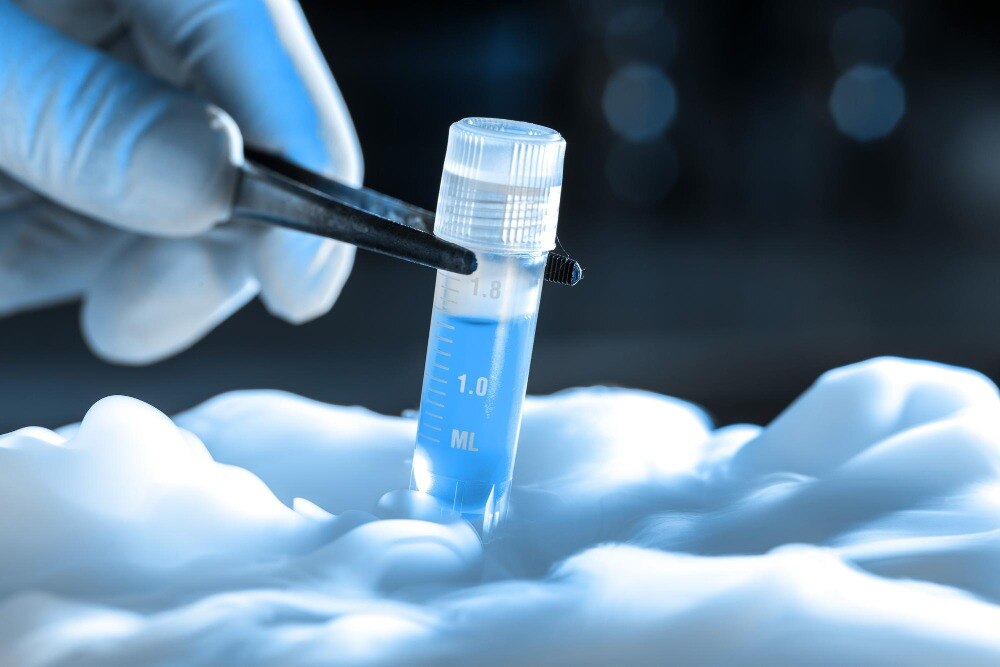
Vitrification cools an embryo so rapidly that damaging ice crystals have little time to form. Older slow-freezing methods remove water gradually and are now much less common for routine IVF storage, so ask which technique the clinic uses and why.
| Method | Cooling approach | Main concern |
|---|---|---|
| Vitrification | Ultra-rapid cooling with protective solutions | Survival is high after warming, but not guaranteed |
| Slow freezing | Gradual cooling over time | Greater risk of ice-crystal damage and lower recovery in some settings |
The embryo is sealed in a labelled carrier and stored in liquid nitrogen at approximately −196°C. The laboratory should link its unique identifier, developmental stage and storage location to duplicate records, then verify those details before warming and transfer.
During warming, staff reverse the cooling process and remove the protective solutions. They assess whether the embryo has survived and resumed the expected appearance; an embryo that does not survive cannot be transferred. The clinic should explain whether another stored embryo can be warmed, subject to your consent and treatment plan.
Frozen embryo transfer does not require another stimulation or egg-retrieval cycle. The uterine lining can be prepared in a natural or ovulation-tracking cycle, or with hormone medication when ovulation is absent or timing is difficult. Survival after warming does not guarantee implantation or a live birth.
If comparing embryo cryopreservation in Navi Mumbai, ask for the clinic’s own post-warming survival rate, plus frozen-transfer outcomes by age group—not only its overall IVF pregnancy rate.
Embryos, eggs or sperm: which preservation option fits your situation?
The deciding question is whether you want to preserve gametes or commit them to fertilisation now. Creating embryos requires an egg source and sperm source from a partner or donor, plus consent from the people whose genetic material is used.
Freeze eggs to preserve reproductive choice without choosing sperm or fertilising; freeze sperm when future sperm availability could be affected by treatment, surgery or time.
| Option | Preserves | Best fit |
|---|---|---|
| Egg freezing | Unfertilised eggs | You want to postpone fertilisation or partner/donor decisions |
| Sperm freezing | Sperm for later use | You want to protect future sperm availability |
| Embryo freezing | Fertilised eggs with known sperm source | You accept the fertilisation, consent and future-use decisions |
Embryo freezing is the wrong choice when a relationship, donor-material decision or future use remains unresolved. Written agreement should cover who can use embryos, what happens after separation or death, and whether embryos may be donated or discarded.
Age at egg retrieval strongly influences later prospects. Embryos made from younger eggs can matter because they preserve the biology of that earlier retrieval, but embryo quality still affects implantation and live birth.
Freezing does not improve chromosomal status: an embryo can survive warming and still have aneuploidy or fail for uterine, egg, sperm or other reasons.
Choose the number to freeze according to intended family size, embryo quality and the risk of multiple pregnancy—not storage capacity. When comparing embryo freezing in Navi Mumbai or embryo cryopreservation in Navi Mumbai, ask how these decisions are documented rather than pursuing the largest stored number.
Storage records, consent and renewal: who controls frozen embryos?
A storage file should identify exactly what is held and who may authorise its use. For frozen embryo storage in Navi Mumbai, request these records and decisions in writing:
1. Check the freezing report for your unique patient and specimen identifiers, number of embryos, developmental stage, freezing date, tank and canister location, and current consent status. Ask for duplicate electronic and paper records, plus the identification checks used before storage and transfer.
2. Ask how liquid nitrogen is monitored continuously at approximately −196°C. Confirm independent alarms, staff response, emergency power, backup tanks, disaster-contingency arrangements, and the procedure for tank failure or natural disaster.
3. Under the Assisted Reproductive Technology (Regulation) Act, 2021 and its rules, ask whether the facility is registered under the applicable national ART framework. Read the storage contract for partner consent, donor-gamete restrictions, authorised use, separation, death, donation, disposal, transfer to another clinic, unpaid fees and expired consent documents.
4. Confirm who controls decisions when more than one intended parent is involved. Ask how written consent changes are recorded and whether both partners must approve use, donation or disposal.
5. Request the renewal process, annual payment terms, deadline notices and advance notice before consent expires. Ask what happens if you cannot respond, miss payment or want transfer to another clinic.
When evaluating frozen embryo storage in Navi Mumbai, Parulekar Hospital is one facility to ask these operational questions of; written records and terms matter more than a general storage claim.
Related services
Fertility Support Embryo Freezing (Cryopreservation) Embryo freezing is an advanced fertility preservation technique in which healthy embryos are carefully frozen and stored for future use. View service → |
Diagnostics Ultrasound imaging at Parulekar Hospital is a safe, non-invasive diagnostic procedure that uses sound waves to create detailed images of internal... View service → |
Embryo freezing cost and clinic comparison: what the quotation must include
A realistic embryo freezing cost in Navi Mumbai has two main parts: the initial laboratory charge and continuing storage. Private-sector planning quotes commonly put the initial charge in the tens of thousands of Indian rupees and annual storage in the low tens of thousands. These are planning figures, not regulated tariffs.
Ask for a current, itemised quotation covering:
- Embryology assessment and vitrification
- Blastocyst culture, if embryos are grown to day 5 or 6
- Cryostorage for a stated period, such as one year
- Warming of one or more embryos
- Frozen embryo transfer
- Medicines, ultrasound scans and blood tests for the transfer cycle
- Optional embryo biopsy and genetic testing
- Optional assisted hatching
- Donor eggs, sperm or embryos, if used
Confirm whether storage is billed annually, when renewal is due, what happens after non-payment, and whether the quote includes taxes or repeat procedures. Ask for the freezing report, storage contract and the clinic’s registration under the applicable national ART framework.
When comparing an embryo freezing clinic in Navi Mumbai, assess vitrification and warming protocols, post-warming survival, tank alarms and backup arrangements, consent handling, and the process for transferring embryos elsewhere. Compare frozen-transfer outcomes by age group and per transfer or embryo, not only the clinic’s overall IVF pregnancy rate.
For frozen embryo storage in Navi Mumbai, written terms matter more than a low headline price.
Frequently asked questions
What happens before an embryo is frozen?
Ovarian stimulation develops multiple follicles. Ultrasound scans and estradiol blood tests track response, a trigger injection completes egg maturation, and retrieval collects the eggs for fertilisation and embryo development.
How are embryos frozen and later used?
Clinics commonly use vitrification, a rapid-freezing method. The embryo remains in cryogenic storage until consent and treatment plans allow thawing and transfer.
Should I freeze embryos, eggs or sperm?
Embryo freezing suits people who are ready to fertilise retrieved eggs. Egg freezing preserves unfertilised eggs, while sperm freezing preserves sperm before treatment, medical procedures or fertility changes.
What should an embryo freezing quotation include?
Check whether it lists medication, monitoring scans, blood tests, egg retrieval, laboratory work, vitrification, storage duration, thawing, embryo transfer and renewal charges separately.
Keywords