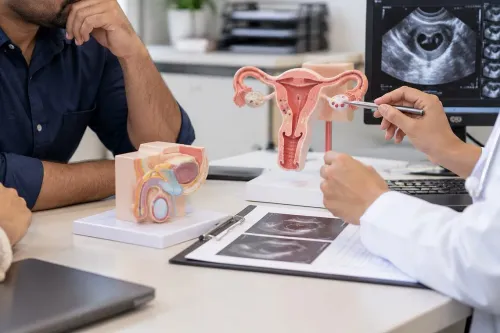
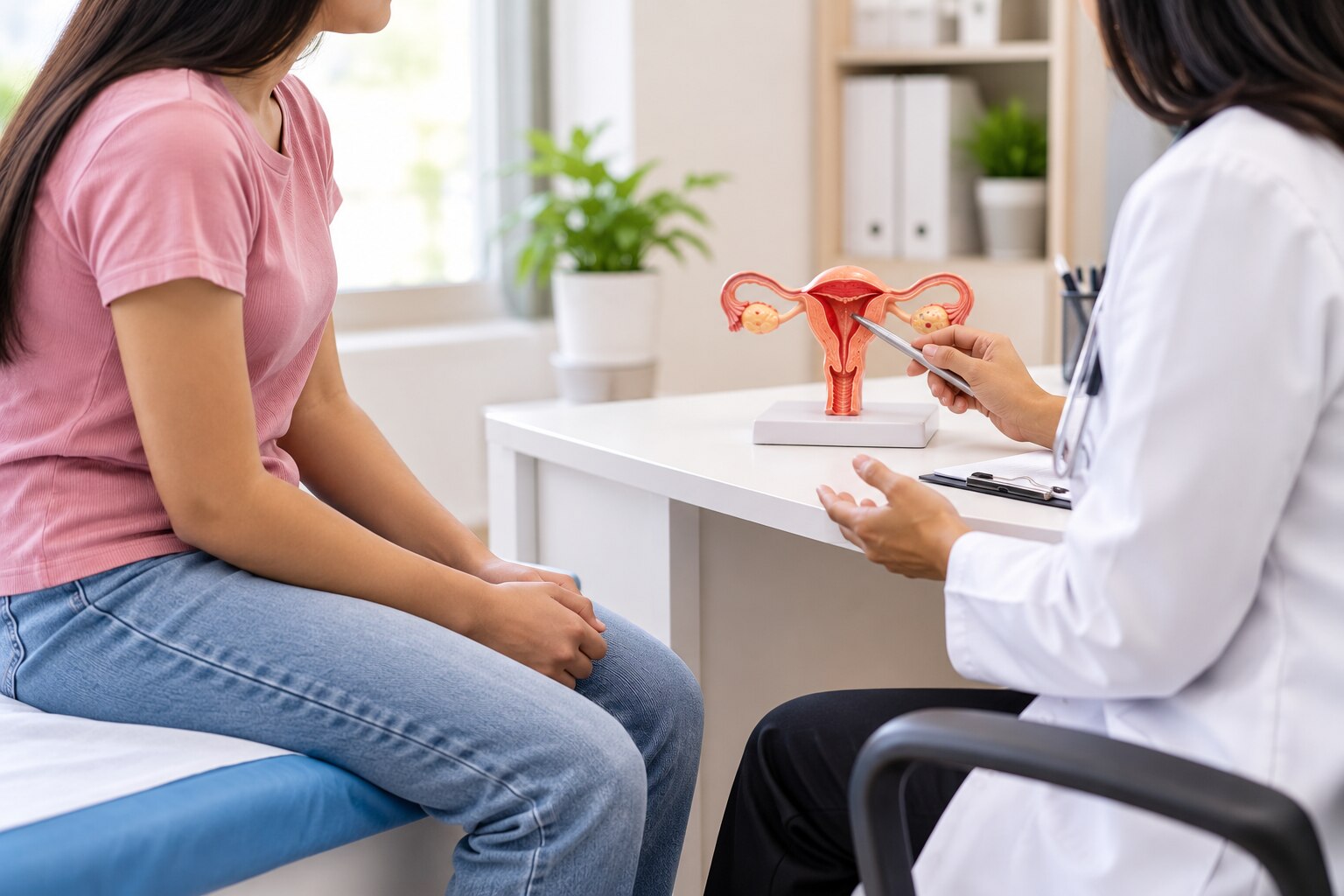
A late, painful, unusually heavy or missing period is not always an emergency, but repeated patterns deserve the right level of care. Use the symptom pattern, warning signs and information you record to decide whether you need home monitoring, an adolescent gynaecologist, another specialist or urgent hospital assessment.
Key takeaways
- Cycles usually range from 21 to 45 days after menarche.
- Bleeding beyond seven days or repeated irregular cycles need assessment.
- Track dates, bleeding days, pain, medicines and related symptoms before visiting.
- Compare doctors by adolescent experience, evaluation, privacy and follow-up care.
When is a period pattern normal, and when does it need medical care?
During the first two to three years after menarche, ovulation can be immature, so cycle timing may vary. Most adolescent cycles fall between 21 and 45 days, and bleeding lasts no more than 7 days. Repeated cycles outside these ranges should not be dismissed as puberty.
1. Arrange an assessment for delayed development if there is no breast development by 13, no first period by 15, or no first period within three years of breast development.
2. Arrange an assessment after menstruation has started if there is no period for 90 days, bleeding lasts longer than 7 days, or periods repeatedly arrive sooner than 21 days or later than 45 days.
Seek care for soaking a pad or tampon every 1 to 2 hours, large clots, overnight leakage, faintness, dizziness, breathlessness, or pain that stops school and ordinary activities.
3. Record dates, bleeding days, protection changes, clots, pain and missed activities before booking adolescent gynaecology care for different period concerns in navi mumbai. This helps separate a one-off variation from a persistent pattern.
Go to a hospital immediately for collapse, severe weakness, palpitations, rapidly soaking protection, severe one-sided pelvic pain, or fever with pelvic pain. A positive pregnancy test with pain or bleeding also needs immediate assessment. Do not wait for a routine appointment when these symptoms occur.
Which doctor and tests fit absent or irregular periods?
Choose the clinician by the pattern, not the clinic label. An adolescent or general gynaecologist can assess cycle changes; a paediatrician or adolescent-medicine clinician suits wider health concerns.
| Clinician | Best fit | What may happen |
|---|---|---|
| Adolescent or general gynaecologist | Absent, irregular or painful periods | Cycle assessment and targeted tests |
| Paediatrician or adolescent-medicine clinician | Under-eating, intense exercise, stress or major weight change | Broader physical and mental-health review |
| Endocrinologist | Suspected thyroid or androgen disease | Hormone and metabolic assessment |
| Haematologist | Easy bruising, frequent nosebleeds or family bleeding history | Bleeding-disorder evaluation |
Stress, under-eating, intense exercise and weight change can suppress ovulation. Pregnancy, polycystic ovary syndrome (PCOS), thyroid disease and anatomic problems follow different evaluation paths, so request a focused assessment rather than a broad hormone panel.
A single irregular cycle, acne or weight change does not diagnose PCOS. Assessment considers years since menarche, persistent menstrual irregularity and clinical or biochemical hyperandrogenism, while excluding other causes. Ultrasound alone cannot diagnose adolescent PCOS.
Testing depends on the history: pregnancy testing when relevant, thyroid-stimulating hormone, and prolactin for selected absent-period patterns. Request pelvic ultrasound only when structural or ovarian disease is suspected. No internal examination is automatically required.
For adolescent women health care in Navi Mumbai, choose a service that lets the young person explain symptoms privately and matches her concern to the right clinician.
What care compares best for painful, heavy or prolonged bleeding?
A search for a teenage period problem doctor in Navi Mumbai should match the symptom, not just the clinic name.
| Symptom | Care to compare | Main trade-off |
|---|---|---|
| Cramps without red flags | Heat, gentle movement, and clinician-guided ibuprofen or naproxen at pain onset, or 1–2 days before expected bleeding | Check asthma, stomach, kidney, bleeding and medicine risks first. Do not repeat high doses without instructions. |
| Heavy bleeding | Track bleeding; check a complete blood count, ferritin and pregnancy test when relevant; replace iron if deficient | Non-hormonal medicines can reduce bleeding without contraception. Hormonal methods can control bleeding but bring side effects, daily-tablet effort and contraception implications even when contraception is not the goal. |
| Rapidly heavy bleeding | Urgent assessment, especially with fainting, marked weakness, breathlessness, palpitations or severe pain | Do not wait for a routine appointment. |
Ask about nosebleeds, easy bruising and relatives with heavy bleeding. Targeted testing for a bleeding disorder, thyroid or other endocrine cause can prevent repeated treatment of the wrong problem.
Endometriosis belongs in the discussion when pain starts before or during bleeding, causes bowel or bladder pain, worsens, continues despite suitable first-line care or repeatedly causes school absence. Ultrasound cannot rule out every case, so persistent symptoms need clinical review even after a normal scan.
A clinician may initially observe and track several cycles when bleeding is mild and the young person is well. Record dates, bleeding days, clots, protection changes, pain and missed activities; seek urgent care instead when protection is rapidly soaked or severe weakness develops.
How should you prepare for an adolescent period consultation?
Bring a clear symptom record, medicines list and a trusted adult if you want support. Before the appointment, prepare:
1. Record your age at first period, cycle dates for several months, bleeding days, pad or tampon type and number, night-time changes, clots and a pain score from 0 to 10.
2. Note missed school or activities, medicines taken, sleep, exercise, food intake, weight changes, acne, facial or body hair, and family history of heavy bleeding, anaemia, thyroid disease or PCOS.
3. Write down questions about tests and treatment. Do not use leftover hormonal tablets, order a broad hormone panel independently or take repeated high-dose pain medicine.
4. Do not take aspirin unless a clinician specifically prescribes it. Paracetamol or ibuprofen limits must match your age, weight, health history and other medicines.
You can bring a parent or trusted adult and ask to speak privately with the clinician. Ask how confidentiality works and when safety concerns, serious illness or consent requirements mean information must be shared.
An internal examination is not routine for every period complaint. It should be clinically indicated, explained beforehand and acceptable to you; you can ask questions before agreeing.
Expect follow-up when needed. Repeat blood tests, medication reviews and several cycles of tracking may be necessary even when initial results are normal.
How do you compare gynaecology options for teenage girls in Navi Mumbai?
Choose by the problem and the referral pathway, not by the label “teen clinic.” These gynaecology options for teenage girls in Navi Mumbai differ in adolescent experience, privacy and access to tests.
| Clinician | Best fit | Ask about |
|---|---|---|
| Adolescent or general gynaecologist | Irregular, painful or heavy periods | Adolescent consultations and non-routine pelvic examinations |
| Paediatrician or adolescent-medicine clinician | Broader health, eating, sleep or growth concerns | Coordination with gynaecology and mental-health care |
| Endocrinologist or haematologist | Suspected thyroid or androgen disorder; bruising, nosebleeds or family bleeding history | Direct referral and shared test review |
Before booking, ask:
- Does the service regularly see adolescents, and can she speak privately with the clinician?
- Can she request a female clinician? What parent or trusted-adult arrangement, identification, records and consent information are required?
- How long is the consultation, what is the fee, and are laboratory tests and pelvic ultrasound available or referred elsewhere?
- Who reviews results, how soon is follow-up, and can medication be adjusted over several cycles?
- What is the emergency pathway for rapidly soaking protection, faintness, breathlessness or severe bleeding?
- Is paediatric, endocrinology, haematology or mental-health coordination available?
Adolescent women’s care is a process, not a one-visit answer, especially when symptoms disrupt school, eating, sleep or emotional wellbeing. Parulekar Hospital may be considered when its adolescent gynaecology, diagnostic and hospital support match the concern; confirm the clinician, tests, follow-up and urgent-care arrangements rather than relying on an online listing.
Related services
Gynaecology focuses on the unique health needs of teenage girls. At Parulekar Hospital, we provide expert care for menstrual disorders, PCOS, hormonal... View service → |
Gynaecology At Parulekar Hospital, we provide expert care for menstrual disorders such as irregular periods, heavy bleeding, painful cycles, and hormonal... View service → |
Frequently asked questions
When is an adolescent period pattern normal, and when does it need medical care?
During the first two to three years after menarche, cycle timing can vary as ovulation matures. Most cycles last 21 to 45 days, with bleeding lasting no more than seven days. Seek medical care for repeated cycles outside these ranges, very heavy bleeding, severe pain, fainting, or periods that stop.
Which doctor and tests fit absent or irregular periods?
Start with a gynaecologist experienced in adolescent care. Take a cycle record and medication history. The clinician may assess pregnancy when relevant, thyroid function, blood count, prolactin, androgen levels, or polycystic ovary syndrome based on symptoms; testing should match the history and examination.
What care compares best for painful, heavy or prolonged bleeding?
Painful periods require assessment of severity, timing and response to pain relief. Heavy or prolonged bleeding calls for checks such as a blood count and evaluation for anaemia or bleeding disorders. Treatment depends on the cause and can include pain medicine, iron, hormonal treatment or specialist referral.
How should you prepare for an adolescent period consultation?
Record the first day of each period, bleeding duration, pad or tampon changes, clots, pain score, missed school, medicines and associated symptoms. Bring previous test reports and a list of medicines. Ask about privacy, the proposed tests, treatment choices and follow-up.
Related services
Diagnostics at Parulekar Hospital help evaluate the balance of essential hormones in your body to diagnose conditions related to thyroid, fertility, metabolism,... View service → |
Procedures & Surgeries Endometriosis is a condition where tissue similar to the uterine lining grows outside the uterus, causing pelvic pain, heavy periods, and fertility... View service → |
Keywords