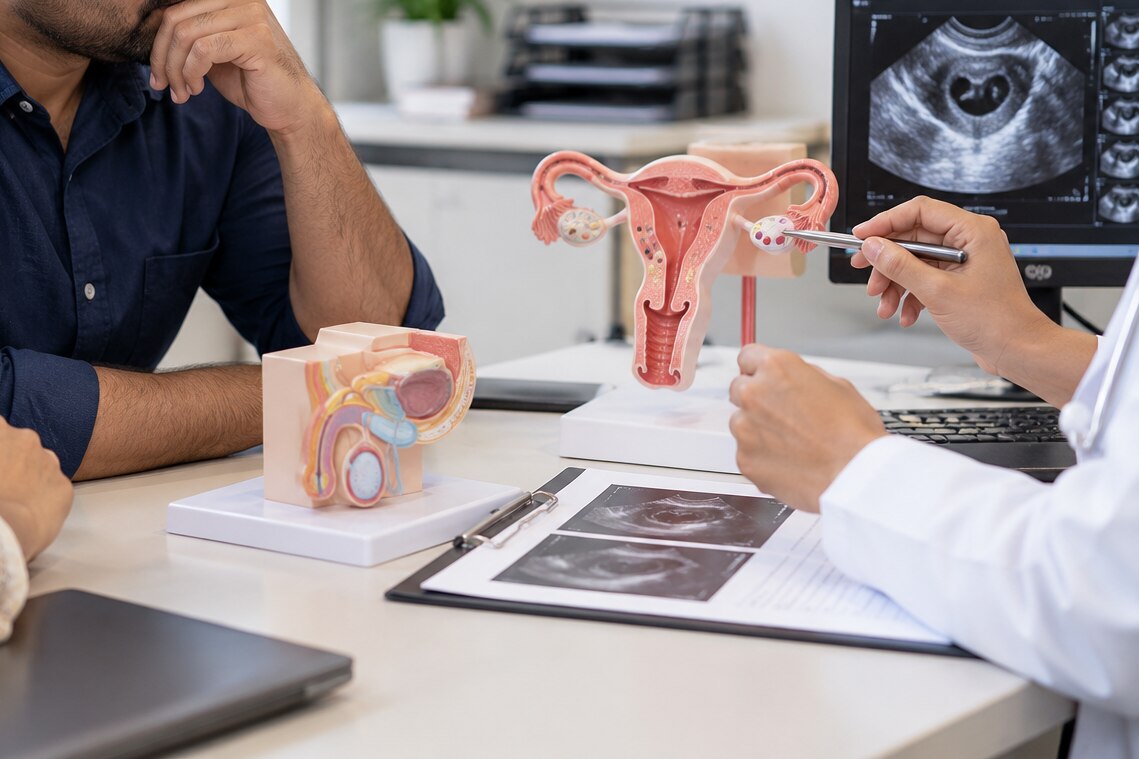
The right time to seek an evaluation depends on age, months of regular unprotected intercourse, and medical history—not on a requirement to keep trying indefinitely. You will be able to identify when testing is due, prepare both partners for the first appointment, and judge what the results can realistically tell you.
Key takeaways
- Seek evaluation after 12 months if under 35, or six months from age 35.
- Start testing for both partners together, including semen analysis and ovulation assessment.
- Use selective tests only when symptoms, history, or initial results justify them.
- Leave with a treatment plan, timeline, and clear criteria for changing course.
When waiting is reasonable—and when it is not
1. If the woman is under 35, arrange an infertility evaluation after 12 months of regular, unprotected intercourse without pregnancy.
2. At ages 35 to 39, arrange evaluation after 6 months. Waiting a full year can reduce the time available for diagnosis and treatment.
3. At age 40 or older, seek evaluation without delay rather than using a waiting period.
These are time-to-evaluation thresholds, not instructions to keep trying when a warning sign is already present.
Arrange earlier assessment at any age for absent or highly irregular periods, severe pelvic pain or suspected endometriosis, previous pelvic inflammatory disease, ectopic pregnancy, pelvic surgery, known tubal or uterine disease, prior chemotherapy or radiation, recurrent miscarriage, or suspected male-factor infertility.
If you are asking, “is infertility evaluation worth it in navi mumbai,” the answer is yes when delay could reduce your options or leave a treatable problem undiscovered. Evaluation can show whether ovulation, sperm production, or tubal transport needs attention, even if you are unsure about assisted reproduction.
For anyone searching “when to get infertility testing in navi mumbai,” the location does not change the clinical thresholds. Your age, months of trying, menstrual pattern, medical history, and both partners’ health determine timing.
A normal initial work-up also does not make pregnancy impossible; it may result in unexplained infertility, meaning routine tests found no cause.
Why both partners should start the work-up together
Infertility evaluation is not a women-only process. Male factors contribute wholly or partly to about half of infertility cases, so testing only the woman can waste time and create an inaccurate assumption about responsibility.
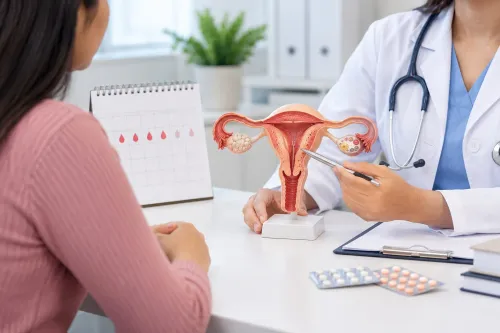
1. Attend the first consultation together. The clinician will ask both partners about sexual and reproductive history, including cycle length, bleeding, ovulation signs, pelvic pain, intercourse timing, contraception, previous pregnancies, miscarriages, illnesses, medications, alcohol, tobacco, heat exposure and occupational risks. A physical examination may be performed when indicated.
2. Bring menstrual-cycle dates, ovulation-test results, pregnancy records, operation reports, medication and supplement lists, sexually transmitted infection history, and previous semen or fertility-test reports. These details help connect symptoms and past events to the tests chosen.
3. Expect concurrent evaluation even when one partner appears to have an obvious problem. A known irregular cycle does not rule out a sperm issue, and an abnormal semen result does not rule out ovulation or tubal problems. Checking both partners together prevents one finding from ending the investigation too early.
This approach makes infertility evaluation for couples in Navi Mumbai more efficient and fair: it identifies whether ovulation, sperm production, or reproductive anatomy needs attention without assigning blame before the evidence is available.
What the first tests can—and cannot—tell you
The first tests usually produce useful direction, not a complete explanation. Semen analysis measures sperm concentration, motility, and morphology, but results vary between samples. An abnormal result, especially low concentration or motility, is commonly repeated before conclusions are drawn.
1. Follow the laboratory’s abstinence interval. Collect the complete sample in the supplied container, avoid losing the first portion, and deliver it promptly according to the laboratory’s instructions.
2. Regular menstrual cycles can suggest ovulation. When confirmation is needed, time serum progesterone for about one week before the expected next period, not automatically on day 21; the correct day changes with cycle length.
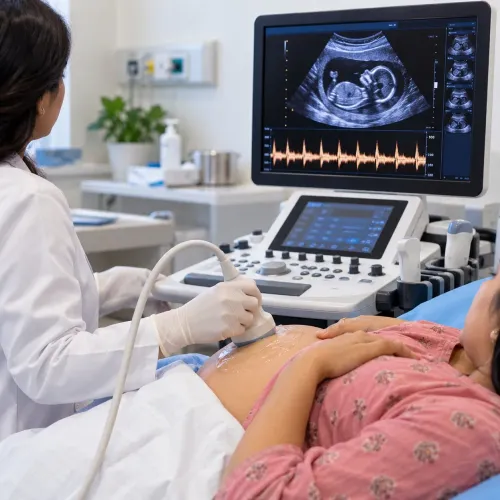
3. Ultrasound can assess the uterus and ovaries, including antral follicles, fibroids, cysts, and signs that raise suspicion of endometriosis. It cannot identify every cause of infertility.
AMH and antral-follicle count help estimate ovarian response to stimulation and plan treatment. They do not predict natural conception on their own: low AMH is not the same as infertility, and age remains a stronger predictor for many decisions.
The fertility assessment benefits in Navi Mumbai, as elsewhere, come from combining these results with both partners’ history, examination, and goals—not from collecting every available test. A result should guide the next decision, not become a diagnosis by itself.
Which additional tests are useful—and which are selective
A normal or abnormal first assessment does not make every available test necessary. Tubal-patency testing is useful because blocked tubes prevent sperm and egg from meeting, but the choice depends on your history.
| Test | What it adds | When it is useful |
|---|---|---|
| Hysterosalpingography | X-ray view of the uterine cavity and tubes | Commonly used without a history suggesting pelvic disease |
| HyCoSy | Ultrasound-based assessment of tubal passage | Alternative where suitable expertise exists |
| Laparoscopy with dye | Direct view of the pelvis and tubes | Suspected endometriosis, adhesions, or another surgical indication |
Order thyroid or prolactin testing when symptoms, menstrual changes, or ovulation concerns provide a reason. Genetic testing fits selected cases, including recurrent miscarriage or semen findings such as severe sperm-production impairment.
Postcoital testing, sperm DNA-fragmentation testing, immunologic testing, thrombophilia panels, diagnostic hysteroscopy, and diagnostic laparoscopy are not routine tests for everyone. They can reveal findings that do not change treatment, adding cost and anxiety.
A normal work-up can still be valuable. “Unexplained infertility” means routine tests found no cause; it does not mean pregnancy is impossible. The fertility assessment benefits in Navi Mumbai, or anywhere else, come from choosing useful information based on age, trying duration, findings, treatment preferences, and cost—not from ordering the largest number of tests.
How to make the evaluation a useful decision, not just a diagnosis
Evaluation is worthwhile even if you are unsure about IVF. It can identify time-sensitive problems, show whether ovulation, sperm production, or tubal transport is limiting conception, and match the next step to age, months trying, findings, preferences, and budget.
If you ask, “is infertility evaluation worth it in Navi Mumbai?”, remember that location does not change the clinical threshold. The consultation does not commit you to assisted reproduction; it can clarify which option deserves discussion:
| Option | What it clarifies | When it fits |
|---|---|---|
| Continue timed intercourse | No urgent problem is evident | Reassuring findings and suitable age |
| Treat a specific condition | A detected problem may be correctable | Ovulation, hormonal, uterine, or male-factor finding |
| Further testing | Initial results need targeted clarification | Possible tubal disease or unclear findings |
| Assisted treatment | Time or findings favour faster help | Reduced reserve, tubal blockage, or significant sperm-factor concern |
For infertility evaluation for couples in Navi Mumbai, choose a consultation that assesses both partners together, provides access to the needed laboratory and imaging pathways, gives precise semen-collection and delivery instructions, and schedules a review of results rather than ordering isolated tests.
Parulekar Hospital is one local option for discussing evaluation and next-step choices with a women’s healthcare and reproductive medicine team.
When deciding when to get infertility testing in Navi Mumbai, use this rule: if the age threshold or any earlier-warning condition applies, the potential cost of delay is a stronger reason to book than uncertainty about treatment.
Related service
Gynaecology at Parulekar Hospital involves a thorough assessment to identify the cause of difficulty in conceiving. View service → |
Frequently asked questions
When should you get infertility testing in Navi Mumbai?
If the woman is under 35, arrange an evaluation after 12 months of regular, unprotected intercourse without pregnancy. Arrange it after six months at age 35 or older, or sooner with irregular periods, suspected endometriosis, prior pelvic surgery, recurrent miscarriage, or known male-factor concerns.
Why should infertility evaluation for couples in Navi Mumbai include both partners?
Pregnancy depends on sperm, ovulation, fallopian tubes, the uterus, and timing. Testing both partners together avoids delays and prevents placing responsibility on only one person.
What do the first fertility tests show?
Initial testing can assess semen count and movement, ovulation patterns, ovarian reserve indicators, and the uterus or fallopian tubes. Normal results reduce concern in those areas but do not guarantee pregnancy or identify every cause.
Are advanced fertility tests necessary for everyone?
No. Tests such as hysteroscopy, laparoscopy, genetic testing, sperm DNA fragmentation testing, and specialised immune or clotting panels are selective. Use them when symptoms, medical history, or initial findings provide a clear reason.
Keywords