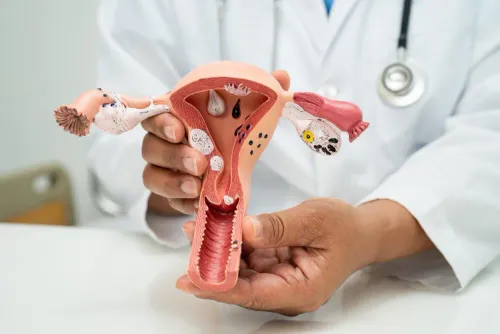
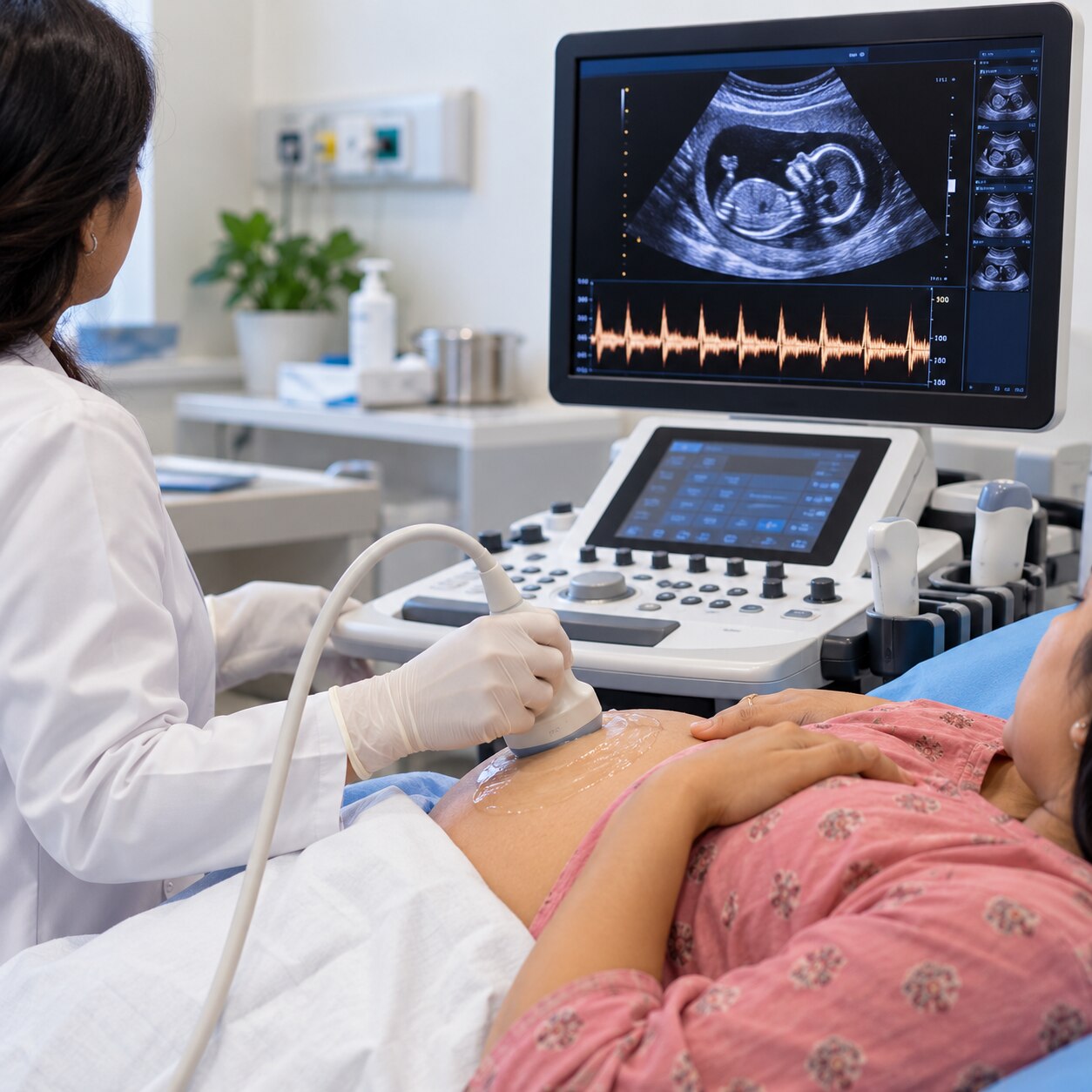
A fetal monitoring scan and a routine antenatal checkup answer different questions, so choosing one instead of the other can leave important risks unchecked. You will learn what each visit measures, when doctors order NST, CTG, BPP, growth, fluid or Doppler testing, and how to build the right monitoring plan for your pregnancy.
Key takeaways
- A scan checks fetal wellbeing; a checkup assesses your overall pregnancy health.
- Ask which surveillance test matches your specific pregnancy risk.
- A normal monitoring result reflects that appointment, not the entire pregnancy.
- Keep scheduled checkups even when fetal monitoring results are reassuring.
A scan and a checkup measure different parts of pregnancy health
A fetal monitoring scan cannot replace a routine high-risk pregnancy checkup: they measure different parts of pregnancy health. A routine visit includes blood pressure, weight, urine protein when indicated, blood tests, symptom and medication review, abdominal or physical examination, fetal-growth assessment, and discussion of warning signs such as bleeding, severe headache or reduced movement.
| Appointment | What it measures | What it cannot measure |
|---|---|---|
| Routine checkup | Maternal health, blood pressure, weight, urine, symptoms, medicines and physical findings | Detailed fetal heart-rate patterns, blood flow or ultrasound anatomy |
| Ultrasound scan | Fetal growth, estimated weight, amniotic-fluid volume and, when ordered, Doppler blood flow | Maternal blood pressure, urine protein and many maternal symptoms |
| NST | Fetal heart-rate changes through external sensors; it produces no ultrasound image | Fetal growth, fluid volume, fetal anatomy or placental blood flow |
The phrase “fetal monitoring scan” is not one standardized test. It may mean an ultrasound with growth, fluid and Doppler measurements, or a nonstress test (NST), also called cardiotocography when contractions are recorded.
Doctors schedule both appointments when maternal disease or fetal risk requires them because a reassuring fetal result does not rule out pre-eclampsia, medication problems or other maternal complications.
High-risk pregnancy is a risk category, not a diagnosis that automatically requires weekly scans. The timing depends on the condition, its severity, gestational age and whether delivery would be considered if results worsened.
Which fetal surveillance test is ordered for which risk
Reduced fetal movement calls for fetal heart-rate surveillance, while suspected growth restriction calls for ultrasound measurements and Doppler assessment. The risk factor determines the question, so a high risk pregnancy scan in Navi Mumbai should be ordered for a defined clinical purpose.
| Test | What it measures | Common reason for ordering |
|---|---|---|
| NST | Fetal heart-rate baseline, accelerations, variability and decelerations; it uses an external monitor and produces no ultrasound image | Reduced movement, diabetes, hypertension, previous stillbirth or post-term pregnancy |
| CTG | The same fetal heart-rate features, usually alongside uterine activity | Suspected compromise, contractions, bleeding or a need for continuous tracing |
| BPP | NST plus fetal breathing movements, gross body movements, fetal tone and amniotic-fluid volume | Nonreactive NST or several risk factors requiring a broader wellbeing assessment |
| Growth ultrasound | Estimated fetal weight, growth percentile and body measurements | Suspected fetal-growth restriction, diabetes, hypertension, multiple pregnancy or placenta problems |
| Amniotic-fluid assessment | Fluid volume, using measurements such as the amniotic-fluid index or deepest vertical pocket | Suspected leaking fluid, growth restriction, post-term pregnancy or abnormal fetal wellbeing |
| Umbilical-artery Doppler | Blood-flow resistance in the placenta | Suspected fetal-growth restriction, especially when placental insufficiency is a concern |
A growth ultrasound is not a BPP: it estimates size and interval growth, not all four BPP activities. Doppler is not interchangeable with either; absent or reversed end-diastolic flow needs specialist planning with gestational age and the complete report. Serial measurements matter because one estimated weight cannot show whether growth is slowing.
When monitoring starts and what happens at the appointment
Surveillance starts when the risk becomes meaningful and delivery would be considered if results worsen—not simply when pregnancy is labelled high risk. Many indications lead to NSTs or BPPs around 32–34 weeks; severe hypertension, growth restriction or abnormal Doppler findings can require earlier testing.
Starting too early can produce a nonreactive NST because fetal nervous-system maturity changes with gestational age.
| Test or plan | What it does | Timing |
|---|---|---|
| One-off NST or BPP | Checks current fetal wellbeing | Reduced movement or a specific clinical concern |
| Serial growth scans | Compares estimated growth, fluid and Doppler findings over time | Spaced far enough to show interval growth |
| Twice-weekly NSTs | Repeats heart-rate surveillance | Considered when ongoing risk is high or findings need close follow-up |
If you are arranging fetal monitoring for high risk pregnancy in Navi Mumbai, ask the clinic for preparation instructions before arriving.
- Follow any supplied eating or drinking instructions.
- Lie back, or slightly tilted to one side if that is more comfortable.
- For an NST or CTG, staff place external sensors around your abdomen to record fetal heart rate and contractions.
- For ultrasound, staff move a probe over gel on your abdomen. It should not be painful.
- Allow about 20–40 minutes for an NST; an ultrasound or BPP can take longer if views are difficult.
Before leaving, ask who will explain the result, when the next test is due, and whether any finding requires same-day assessment.
How to read common results—and why a normal result is not a guarantee
1. A reactive NST usually means the tracing shows an appropriate baseline fetal heart rate with expected accelerations for that gestational age.
A nonreactive NST is not an automatic diagnosis of distress; the clinician may review the recording, allow more time, repeat testing or order a biophysical profile (BPP), which also assesses breathing movements, body movements, tone and amniotic-fluid volume.
2. Estimated fetal weight is an ultrasound estimate, not a direct weighing. Doctors interpret it with the growth percentile, change between scans, fluid volume, Doppler findings and your maternal condition. The amniotic-fluid index (AFI) is a measurement of fluid volume.
Doppler resistance indices need the gestational age and complete report; absent or reversed end-diastolic flow in the umbilical artery is a high-risk finding requiring urgent specialist planning, which can include closer surveillance, hospital assessment, corticosteroids or delivery planning.
3. A reassuring pregnancy monitoring scan in Navi Mumbai, or elsewhere, is only a snapshot. It cannot rule out every complication, diagnose every birth defect or guarantee an uncomplicated delivery. Do not diagnose yourself from a percentile, AFI or Doppler number; ask the treating team what it means for your complete report and follow-up.
Seek prompt assessment for new reduced fetal movement, bleeding, fluid loss, contractions, severe headache, visual symptoms or breathing difficulty, even after a normal result.
How to choose the right follow-up plan in Navi Mumbai
The right plan depends on the risk being monitored, not on choosing a fetal monitoring scan or routine checkup for high risk pregnancy in Navi Mumbai. Ask your obstetrician which question needs answering and whether one appointment covers it.
| Option | What it measures | When it applies |
|---|---|---|
| Routine maternal review | Blood pressure, weight, urine protein when indicated, symptoms, medicines, examination and maternal-fetal assessment | Every high-risk pregnancy plan |
| NST or CTG | Fetal heart-rate baseline, variability, accelerations and decelerations | Reduced movements, hypertension, diabetes or other risks requiring surveillance |
| Growth and fluid scan, BPP or Doppler | Growth percentile, amniotic-fluid volume, fetal activity and placental blood flow | Suspected growth restriction, abnormal fluid, multiple pregnancy or placental concerns |
At the appointment, ask:
- What risk factor is being monitored, and do I need a routine review, NST or CTG, growth and fluid scan, BPP, Doppler study, or more than one?
- When should testing begin, how often should it repeat, and which result requires same-day assessment?
- What were my last blood pressure, urine-protein, growth-percentile, fluid and Doppler findings?
- Should reduced movements, bleeding, fluid loss, severe headache, visual symptoms or breathing difficulty send me for immediate assessment?
Bring prior scan reports, medication names and doses, diabetes or blood-pressure records, and the date and pattern of any reduced movements. Surveillance might begin around 32–34 weeks for some conditions, earlier for serious disease, and repeat weekly or twice weekly only when your clinician recommends it.
For fetal monitoring for high risk pregnancy in Navi Mumbai, Parulekar Hospital is useful when obstetric review, surveillance, report interpretation and escalation follow one coordinated pathway rather than treating a scan as a standalone purchase.
Related services
Obstetrics at Parulekar Hospital ensure the health and well-being of both mother and baby throughout pregnancy. View service → |
Obstetrics Pregnancy Care (Normal & High-Risk) At Parulekar Hospital, we provide comprehensive and compassionate pregnancy care for both normal and high-risk pregnancies. View service → |
Frequently asked questions
Can a fetal monitoring scan replace a routine high-risk pregnancy checkup?
No. A scan assesses fetal wellbeing, while a routine checkup reviews blood pressure, urine protein when indicated, symptoms, medicines, physical findings, fetal growth and warning signs.
Which fetal surveillance test is used for each pregnancy risk?
The test depends on the risk. Ultrasound assesses growth, fluid and blood flow; nonstress testing records fetal heart-rate response; a biophysical profile combines ultrasound observations with heart-rate monitoring. Your clinician selects the test and timing.
When does fetal monitoring start in a high-risk pregnancy?
Timing depends on the condition, its severity, gestational age and previous results. Ask when monitoring will begin, how often it will repeat and which result requires an earlier review.
Does a normal fetal monitoring result guarantee that the pregnancy is safe?
No. It describes fetal status during that assessment. Contact your maternity team for reduced fetal movement, bleeding, fluid leakage, severe headache, vision changes, severe abdominal pain or other urgent symptoms.
Related service
Diagnostics Ultrasound imaging at Parulekar Hospital is a safe, non-invasive diagnostic procedure that uses sound waves to create detailed images of internal... View service → |
Keywords