
A VBAC admission involves more than arriving at the maternity ward in labour: the team must verify the old uterine scar, assess the current pregnancy and prepare for rapid intervention if labour becomes unsafe. You will know which records to carry, what happens from triage through birth, how monitoring and pain relief work, and what to check when comparing hospitals in Navi Mumbai.
Key takeaways
- Carry your prior cesarean operative notes, scan reports and medication list.
- Ask how continuous fetal and uterine-scar monitoring will work during labour.
- Confirm induction methods, emergency-cesarean readiness and anaesthesia access before admission.
- Seek urgent assessment for severe abdominal pain, heavy bleeding or abnormal fetal movements.
Before Admission: How the Team Decides Whether VBAC Is Appropriate
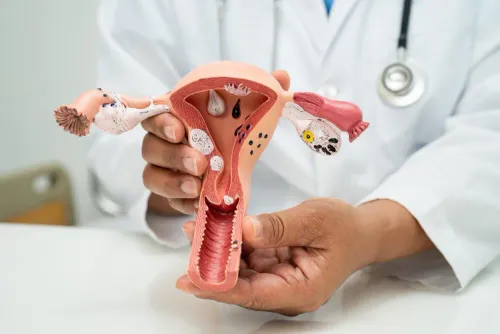
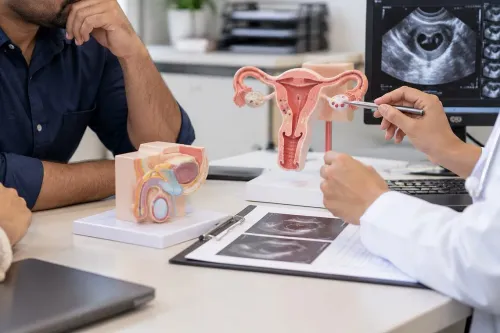
A vaginal birth after cesarean hospital process begins with reviewing your previous uterine scar, not the skin scar. The team considers the number of C-sections, the reason for the earlier operation, any previous vaginal birth, gestational age, placenta location, fetal position and estimated size, maternal conditions, and your preference after counselling.
A previous lower-segment C-section does not automatically require another C-section.
| Scar or history | Usual effect on planned VBAC |
|---|---|
| One previous low-transverse uterine incision | Often suitable after individual assessment, especially with a previous vaginal birth |
| Two or more previous C-sections, or an unclear incision | Specialist discussion is needed before choosing VBAC |
| Classical or T-shaped upper-segment incision, or previous uterine rupture | Planned VBAC is generally unsuitable |
Ask the hospital to review the operative note because the abdominal skin incision cannot prove the uterine incision type. Also confirm that the maternity unit can perform an emergency C-section immediately, provide continuous fetal monitoring, and arrange on-site blood transfusion, with an obstetrician, anaesthetist, theatre and newborn support available around the clock.
Bring these records before the team makes its decision:
- Previous C-section operative note and discharge summary
- Antenatal records, ultrasound reports and blood-group information
- Current medication list, including prescribed supplements
- Identity and insurance documents
If records are unavailable, tell the obstetrician before labour; do not assume the scar type from appearance alone.
What to Carry and When to Go to the Hospital
Keep these records together in a waterproof folder for the VBAC admission process in Navi Mumbai:
- Previous caesarean operative note and discharge summary, showing the uterine-incision type and reason for surgery
- All antenatal records, ultrasound reports and recent blood-test results
- Blood-group and Rh information
- Current medication list, allergy details and relevant medical records
- Government photo identification, insurance or cashless-authorisation documents, and your doctor’s contact details
The skin scar does not prove the uterine-incision type, so bring the operative report. If it is missing, tell the maternity unit before labour rather than waiting until admission.
| Symptom | What to do | Why it matters |
|---|---|---|
| Regular painful contractions that become stronger or closer together | Call the maternity unit and follow its timing instructions; leave when advised | Labour may be progressing |
| Leaking or a sudden gush of fluid | Call immediately and leave for assessment, even without contractions | The membranes may have ruptured |
| Vaginal bleeding, reduced fetal movement, fever, severe constant abdominal pain, faintness or breathlessness | Leave urgently; call emergency services for collapse or severe deterioration | These symptoms need prompt maternal and fetal assessment |
Ask whether the facility has an obstetrician, anaesthetist, operating theatre, neonatal support and blood products available 24 hours a day. Carry your folder, phone charger and prescribed medicines, but do not delay departure to pack them.
Admission, Labour Monitoring and Decisions About Induction
Registration is the first practical step in the vaginal birth after cesarean hospital process. Staff confirm your identity, gestational age, previous operative details, allergies and consent, then triage contractions, waters, bleeding, fetal movement, temperature, pulse and blood pressure. A clinician examines the abdomen, checks the fetal position and records cervical dilation when appropriate.
- A cannula is placed, blood is taken for haemoglobin and blood group checks, and the previous uterine incision is reviewed.
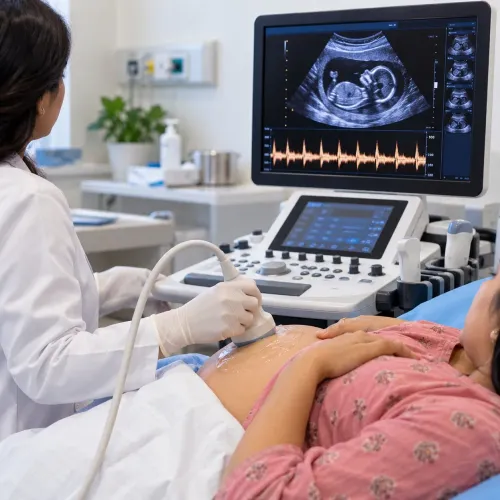
- Continuous cardiotocography records the baby’s heart rate and contractions; intermittent listening is not enough for many VBAC labours.
- Vaginal examinations track dilation, effacement, descent and position. The team also watches pain between contractions, abdominal tenderness, bleeding, maternal pulse and blood pressure.
- New severe abdominal pain, persistent fetal-heart-rate abnormalities, loss of fetal station, faintness or shock triggers urgent review and may require emergency caesarean birth.
Spontaneous labour usually offers a better chance of successful VBAC than induction. Induction is considered when there is a medical reason, but it raises the risks of failed VBAC and uterine rupture; mechanical cervical ripening or carefully selected oxytocin is generally preferred over prostaglandins with a uterine scar.
After birth, staff check uterine tone, bleeding, pulse and blood pressure. This VBAC labour monitoring and recovery continues until concealed bleeding or postpartum haemorrhage is excluded.
Pain Relief, Warning Signs and Emergency Escalation
You can discuss pain relief without ruling out VBAC. Continuous electronic fetal monitoring remains the usual approach, because an abnormal fetal-heart-rate pattern can be an early sign of uterine rupture or another emergency.
Tell the anaesthetist about your previous caesarean: an epidural is permitted, but sudden pain despite it, pain between contractions or maternal deterioration needs immediate assessment.
| Option | What it provides | Important VBAC consideration |
|---|---|---|
| Non-drug methods | Movement, breathing, position changes, massage, heat and water where available | Useful early, but does not replace monitoring or urgent review |
| Nitrous oxide | Inhaled analgesia during contractions | Relief is limited and availability varies |
| Intravenous opioid | Short-term medication for stronger pain | Can cause drowsiness and affect the newborn near birth |
| Epidural | Continuous, effective regional pain relief | Allows emergency anaesthesia planning; new breakthrough pain must not be dismissed |
Induction changes the balance: spontaneous labour has a higher chance of successful VBAC, while induction increases the risk of failed VBAC and uterine rupture. If induction is medically necessary, ask whether a balloon catheter or carefully titrated oxytocin is suitable; prostaglandin cervical-ripening drugs are generally avoided with a uterine scar.
Augmentation with oxytocin also requires close review of contractions and the fetal heart rate.
- Persistent abnormal fetal-heart-rate readings
- Severe or constant abdominal pain, vaginal bleeding or loss of fetal station
- Sudden pain between contractions, faintness, low blood pressure or rapid pulse
- A change in uterine shape or unexplained maternal deterioration
These findings can trigger emergency caesarean delivery. Ask how the hospital handles VBAC labour monitoring and recovery, including anaesthesia access, theatre readiness and postpartum warning-sign instructions.
Recovery After VBAC and Questions to Ask Navi Mumbai Hospitals
After a successful VBAC, staff check uterine tone, vaginal bleeding, pulse and blood pressure, then monitor urination, mobility, perineal pain and breastfeeding. Your stay depends on your condition, the baby’s assessment and hospital policy; VBAC does not guarantee same-day discharge. Discharge instructions should cover pain medicines, perineal care, breastfeeding, contraception, newborn follow-up and return precautions.
Seek immediate review for:
- Heavy or increasing vaginal bleeding
- Severe, persistent abdominal pain, new pain between contractions or pain that suddenly worsens despite an epidural
- Faintness, a racing pulse, increasing breathlessness or collapse
- Fever, confusion or a rapidly worsening condition
- Severe headache, visual disturbance or high blood pressure symptoms
The VBAC labour monitoring and recovery plan should include clear escalation instructions, not routine reassurance when symptoms change. Ask Parulekar Hospital the same operational questions you ask every Navi Mumbai facility.
| Question to ask | Why it matters | What to confirm |
|---|---|---|
| Is an obstetrician, anaesthetist and operating theatre available 24 hours? | Emergency caesarean may be needed without delay | Immediate on-site access |
| Is continuous fetal monitoring available? | Changes in the fetal heart rate need rapid interpretation | Monitor and trained staff present |
| Can blood products be obtained on site? | Postpartum haemorrhage needs prompt treatment | 24-hour transfusion access |
| Is neonatology or a NICU available? | A newborn may need urgent respiratory or resuscitation support | On-site team and equipment |
| What happens if surgery cannot be provided? | Transfer adds time during an emergency | Named ambulance pathway and receiving hospital |
| Will you review my previous operative note before labour? | The uterine incision affects VBAC suitability | Record accepted and assessed in advance |
Related service
Obstetrics VBAC (Vaginal Birth After Cesarean) Treatment At Parulekar Hospital, we offer safe and carefully monitored VBAC (Vaginal Birth After Cesarean) for eligible mothers who wish to deliver naturally... View service → |
Frequently asked questions
What does a VBAC hospital admission process in Navi Mumbai involve?
The team reviews your previous cesarean records, pregnancy findings, labour symptoms and birth preferences, then checks you and the baby before planning monitoring and ongoing care.
How is labour monitored during a vaginal birth after cesarean?
The hospital monitors the fetal heart rate and contractions, assesses cervical progress and watches for warning signs such as persistent abdominal pain, bleeding or changes in the fetal heart pattern.
How are decisions about induction made for VBAC?
The obstetric team discusses whether induction is appropriate, which method is suitable, the chance of assisted birth or cesarean delivery, and how monitoring will change during the process.
What should I ask a Navi Mumbai hospital about VBAC recovery?
Ask about pain control, bleeding and wound checks, mobility, breastfeeding support, newborn care, discharge timing, follow-up appointments and symptoms that require urgent review.
Keywords