Heavy bleeding, missed periods, severe cramps, spotting, or a cycle that has changed can make a first appointment feel unpredictable. You will learn what to record, what happens during consultation and examination, how testing is chosen, what treatment discussions involve, and when you need urgent care instead of a routine visit.
Key takeaways
- Record three to six months of cycle dates, bleeding, pain, and related symptoms.
- Bring medication details, previous reports, and your menstrual symptom diary.
- Expect pregnancy testing, blood tests, ultrasound, or other tests based on symptoms.
- Ask how each treatment affects bleeding, fertility, side effects, and follow-up visits.
Before the appointment: what to record, bring, and confirm
Record your periods for the previous three to six months before booking. Note the first day of each period, cycle length, number of bleeding days, pad or tampon use, flooding, clots, spotting between periods or after sex, pain severity, and missed periods. Also record dizziness, weakness, acne, excess facial hair, weight change, or hot flashes.
For menstrual disorder treatment, confirm the appointment process in Navi Mumbai directly with the facility:
- Ask whether a gynaecologist can assess your problem during the first visit.
- Confirm whether pregnancy testing and a complete blood count are available on site.
- Ask whether an ultrasound needs a separate booking, and whether you need a full bladder.
- Check whether you should bring previous ultrasound, blood-test, operation, or discharge reports.
- Ask whether you need to carry a medication list, contraception details, or referral letter.
Bring your reports, a list of medicines and supplements, contraception history, allergies, previous pregnancies, and relevant family history, such as bleeding disorders or early menopause. Write down when your last period started and whether pregnancy is possible, even if you use contraception. Take a trusted person if you want support or help remembering instructions.
Do not wait for a routine visit if you soak one pad or tampon every hour for two or more hours, faint, develop severe one-sided pelvic pain, have a positive pregnancy test with bleeding, or feel severely weak. Seek urgent medical care instead.
Check-in, consent, and the first clinical assessment
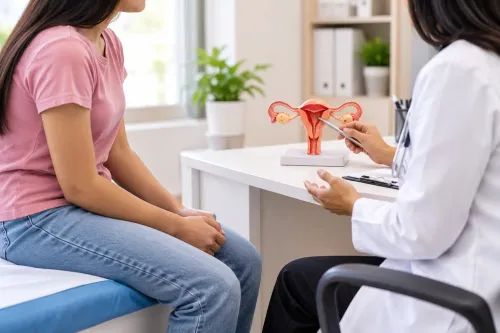
The clinician will usually begin with a detailed bleeding and symptom history, not an immediate scan. At check-in, confirm your name, reason for visit, medicines, allergies, and pregnancy possibility. Before any pelvic examination, the clinician should explain its purpose, what it involves, and alternatives; you can ask for a chaperone, pause, or decline.
During the menstrual problem consultation process, expect questions about:
- Age at first period, cycle length, regularity, missed periods, and bleeding days
- Pad or tampon use, flooding, clots, spotting between periods, and bleeding after sex
- Pain location and severity, pain during sex, pelvic pressure, and bowel or bladder symptoms
- Contraception, emergency contraception, pregnancy history, fertility goals, and previous procedures
- Medicines, including blood thinners, hormonal treatment, and non-prescription products
- Dizziness, breathlessness, tiredness, or fainting that could suggest anaemia
- Acne, excess facial or body hair, weight change, nipple discharge, hot flashes, and thyroid-related symptoms
- Family history of fibroids, endometriosis, bleeding disorders, or cancers
The first examination may include pulse, blood pressure, pallor, weight, and abdominal tenderness. A pelvic examination is chosen according to your symptoms, age, sexual history, and suspected cause; a speculum or bimanual examination is more relevant for bleeding after sex, unusual discharge, pelvic pain, or suspected structural disease.
The clinician should explain the next step before examining you.
Pregnancy checks, blood tests, ultrasound, and diagnosis
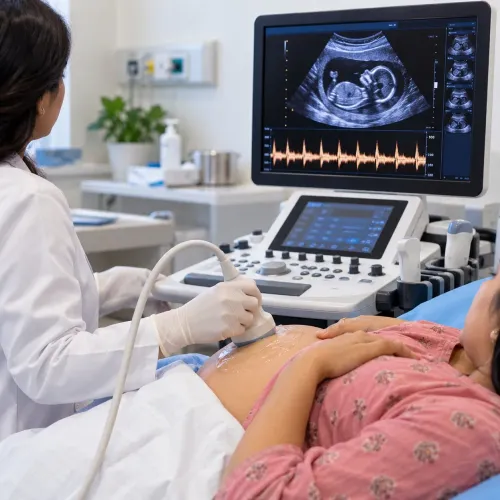
A pregnancy test usually comes before interpreting abnormal bleeding or a missed period. The clinician may order a urine or blood test, complete blood count (CBC) for anaemia, ferritin for iron stores, thyroid-stimulating hormone (TSH), or other hormone tests when your history points to ovulation or endocrine problems.
Diagnosis can be made during the appointment when the history and examination are clear; otherwise, it waits for test or imaging results.
Prepare for these period disorder treatment steps:
- Take your medication and contraception list, previous reports, and the date of your last period. You usually do not need to fast unless the clinic gives separate instructions for a blood test.
- Ask when results will be available. Confirm whether pregnancy testing and blood counts are performed on site and whether an ultrasound needs a separate booking.
- For a transvaginal ultrasound, emptying your bladder is commonly requested; an abdominal ultrasound requires a comfortably full bladder. Follow the facility’s instructions because preparation differs.
| Test | What it checks | When it applies |
|---|---|---|
| Pregnancy test | Pregnancy, which changes the diagnosis and treatment | Missed periods, unusual bleeding, or pregnancy possibility |
| CBC and ferritin | Anaemia and depleted iron stores | Heavy bleeding, fatigue, dizziness, or pallor |
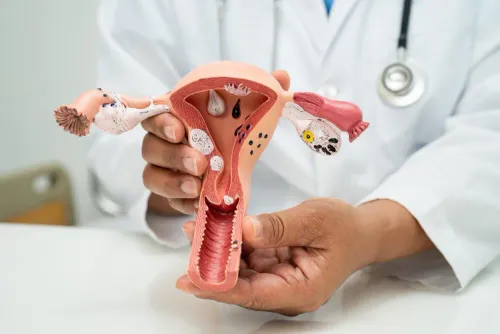
| Pelvic ultrasound | Fibroids, polyps, adenomyosis, ovarian findings, or other structural causes | Persistent bleeding, pain, or an examination concern |
Seek urgent care for bleeding with fainting, severe weakness, severe one-sided pain, or a positive pregnancy test.
Treatment choices, trade-offs, and follow-up work
A treatment plan can begin with symptom relief while the cause is addressed. The choice depends on bleeding pattern, anaemia, pregnancy plans, fertility goals, age, and conditions that make a medicine unsafe.
| Option | What it may involve | Speed and trade-off |
|---|---|---|
| Pain relief | An NSAID started at pain onset or shortly before the expected period | Often helps within hours; avoid it with ulcer disease, kidney disease, NSAID allergy, or certain asthma reactions |
| Bleeding control | Tranexamic acid during heavy-flow days or hormonal treatment | Tranexamic acid works during that period; hormonal treatment often needs two or three cycles and can cause irregular bleeding or other side effects |
| Anaemia treatment | Oral iron, dietary advice, and treatment of ongoing blood loss | Energy improves over weeks, not hours; iron can cause constipation, nausea, or dark stools |
| A procedure | Removal of a polyp, treatment for a fibroid, endometrial sampling, or another operation | It targets a structural cause but involves preparation, recovery, and procedure-specific risks |
Persistent pain despite correctly used NSAIDs needs reassessment for endometriosis or another pelvic condition. An endometrial biopsy is a separate procedure, not an automatic part of every first visit; ask why it is recommended and what discomfort, bleeding, and infection risks apply.
Before leaving, get the medicine name, dose, start date, duration, side effects that require help, and the review date in writing. Keep recording bleeding and pain.
Follow-up may include a symptom review, repeat complete blood count, medication adjustment, or discussion of imaging or biopsy results; contact the clinic sooner if bleeding worsens or treatment causes a concerning reaction.
Choosing the right menstrual-care facility in Navi Mumbai
Compare a period treatment hospital in navi mumbai by what happens around the consultation, not by equipment names alone. Before booking, ask whether a gynaecologist can assess you during the first visit, whether pregnancy testing and a complete blood count are available on site, and whether ultrasound needs a separate appointment.
| Facility check | Strong sign | Question to ask |
|---|---|---|
| First-visit assessment | Gynaecologist reviews your history and examines you | “Can I receive an initial assessment today?” |
| Testing access | Pregnancy testing and complete blood count are available on site | “Will I need to visit another centre for either test?” |
| Ultrasound booking | Staff state whether scanning is same-day or separate | “How soon can the ultrasound be scheduled?” |
| Records and medicines | The facility tells you which documents to bring | “Should I bring previous reports and my medication list?” |
| Follow-up | You leave with a named clinician and review date | “Who explains my results, and when do I return?” |
If you book at Parulekar Hospital, confirm these logistics during the call rather than assuming every test is included in one visit.
Leave with a written next step: the working diagnosis, tests still needed, treatment decision, expected review date, and symptoms that require urgent care. If the clinician cannot explain what happens next, you do not yet have a complete care plan.
Related services
Gynaecology At Parulekar Hospital, we provide expert care for menstrual disorders such as irregular periods, heavy bleeding, painful cycles, and hormonal... View service → |
Gynaecology at Parulekar Hospital focuses on managing symptoms like hot flashes, mood changes, and hormonal imbalance. View service → |
Frequently asked questions
What should I record before a menstrual disorder treatment appointment?
Record three to six months of period dates, cycle length, bleeding days, pad or tampon use, flooding, clots, spotting, pain, and missed periods. Include dizziness, weakness, acne, excess facial hair, weight change, and hot flashes.
What should I bring to a menstrual problem consultation?
Bring your symptom and period records, medication and supplement details, previous blood-test or scan reports, and information about past treatments. Confirm the appointment time, location, fees, and whether you need to fast or bring identification.
What happens during the first clinical assessment?
The clinician reviews your cycle history, bleeding pattern, pain, medical history, medicines, pregnancy possibility, and reproductive goals. They explain proposed examinations and tests before seeking consent.
Which tests might be used for menstrual disorder treatment?
Depending on your symptoms, assessment can include a pregnancy test, blood tests such as a complete blood count and thyroid testing, and pelvic ultrasound. Your clinician explains what each test is checking.
How are menstrual disorder treatment choices compared?
Discuss expected improvement, side effects, duration, effect on fertility, contraception needs, cost, and follow-up requirements. Ask what happens if the first treatment does not control your symptoms.
Related services
Fertility (IVF / ART) Follicular Monitoring is a simple ultrasound-based procedure used to track the growth and development of ovarian follicles during a menstrual cycle. View service → |
Gynaecology PCOS (Polycystic Ovary Syndrome) treatment focuses on balancing hormones, regulating periods, and improving overall reproductive health. View service → |
Diagnostics at Parulekar Hospital help evaluate the balance of essential hormones in your body to diagnose conditions related to thyroid, fertility, metabolism,... View service → |
Gynaecology focuses on the unique health needs of teenage girls. At Parulekar Hospital, we provide expert care for menstrual disorders, PCOS, hormonal... View service → |
Keywords