A fibroid seen on an ultrasound is not automatically the reason you have not conceived. By reviewing its position, size and effect on the uterine cavity alongside ovulation, fallopian-tube and sperm assessments, you can decide whether myomectomy is more useful than monitoring, IVF or another treatment.
Key takeaways
- Cavity-distorting fibroids have the clearest link to implantation problems.
- Ultrasound alone may not show whether a fibroid changes the uterine cavity.
- Compare surgical benefits with recovery, adhesions, and future pregnancy planning.
- Bring scan reports, treatment history, and conception details to your consultation.
Is the fibroid actually causing infertility?
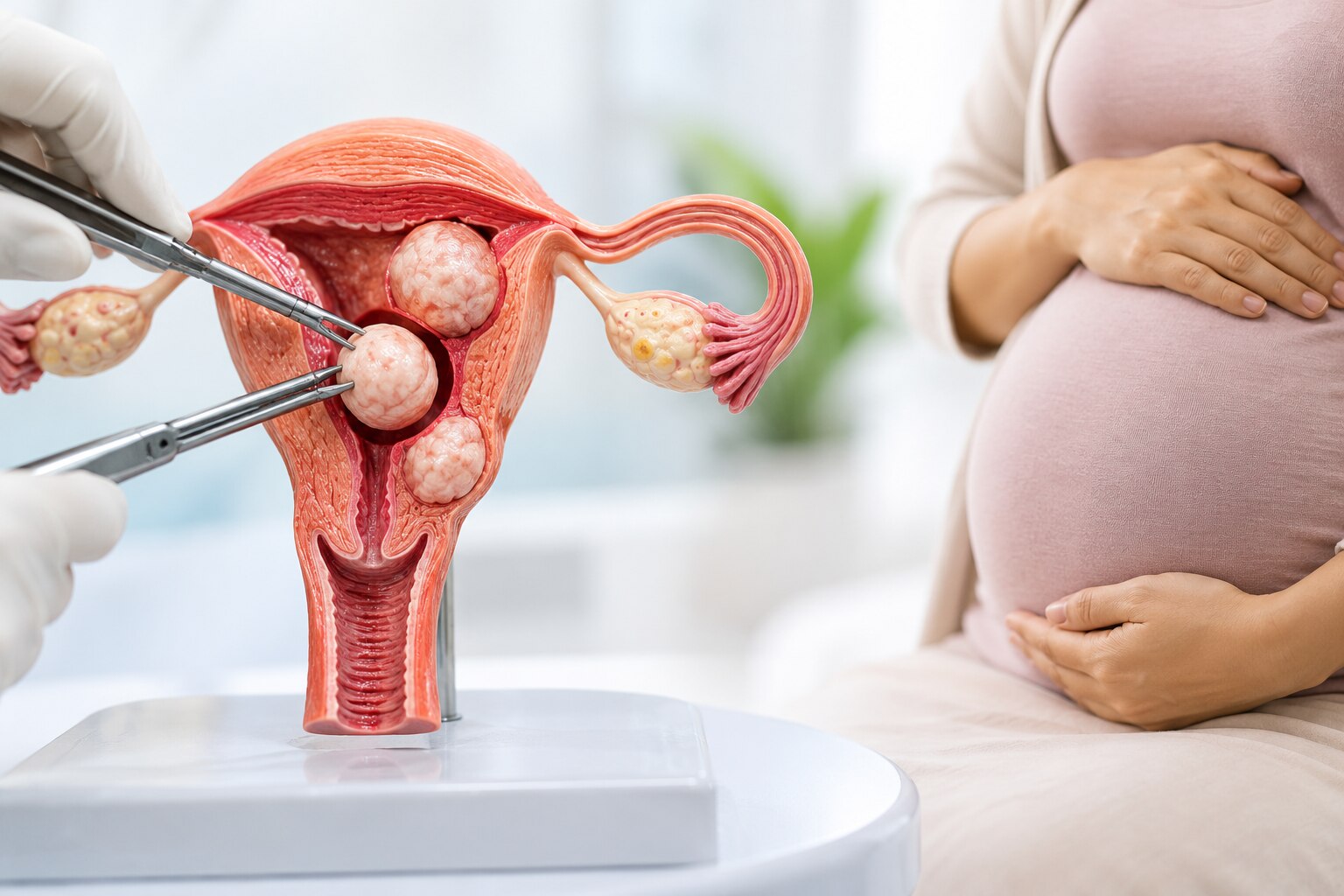
A fibroid is more likely to explain delayed conception when it changes the endometrial cavity, not simply because an ultrasound found one. Submucosal fibroids, and intramural fibroids that bulge into or visibly distort the cavity, have the clearest association with implantation problems and miscarriage risk.
| Type | Position | Likely fertility relevance |
|---|---|---|
| Submucosal | Projects beneath the uterine lining or into the cavity | Strongest link with impaired implantation; removal may improve pregnancy chances |
| Intramural, cavity-distorting | Within the uterine wall but pushes into or changes the cavity | Plausible effect on implantation and miscarriage risk |
| Intramural, non-distorting | Remains within the uterine wall | Evidence for routine removal to improve fertility is weaker |
| Subserosal | Grows on the outer uterine surface | Usually does not interfere with implantation |
Before blaming fibroids affecting fertility in Navi Mumbai, assess the whole fertility picture:
- Age and duration of infertility
- Ovulation and ovarian reserve
- Fallopian-tube patency
- Endometriosis
- Sperm analysis
Follicular monitoring can confirm follicle growth and identify ovulation timing, but it cannot prove that a fibroid is preventing implantation. A normal ovulation scan does not settle the question.
Fibroid infertility treatment in Navi Mumbai should target documented cavity distortion and the wider infertility findings, rather than the mere presence of a fibroid. If the fibroid does not alter the cavity, surgery may delay treatment that addresses another cause.
Which fibroid features and tests determine fertility impact?
The decisive map is the relationship between each fibroid and the endometrial cavity. Doctors record its location, size, number and depth, because fibroids affecting fertility in Navi Mumbai require documented cavity distortion—not simply a fibroid seen on a scan.
| Location | Fertility relevance | What doctors assess |
|---|---|---|
| Submucosal | Strongest concern | Whether it projects into or occupies the cavity |
| Intramural | Depends on anatomy | Size, position and whether it bulges into or distorts the cavity |
| Subserosal | Usually limited impact | Whether it remains on the outer uterine surface |
| Multiple fibroids | More complex planning | Total number, combined size and degree of cavity distortion |
Transvaginal ultrasound is usually the first test. It can show fibroid size and position, but an unclear cavity outline warrants better imaging rather than an automatic operation.
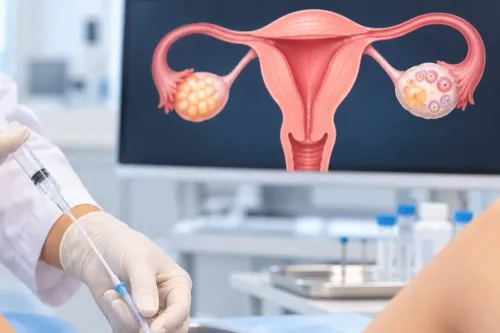
Saline-infusion sonography outlines the cavity after sterile fluid is placed inside the uterus, making a small intracavitary projection easier to see. Hysteroscopy passes a camera through the cervix for direct inspection and is useful when a cavity lesion needs confirmation or treatment planning.
MRI provides detailed mapping before surgery when fibroids are multiple, large or unclearly positioned.
Ask these questions before considering myomectomy for infertility caused by fibroids in Navi Mumbai:
- Does the fibroid change the cavity outline?
- Is it touching or entering the endometrium?
- How many fibroids require treatment?
- Could a different infertility factor explain the delay?
When is myomectomy for conception a reasonable choice?
The case for surgery is strongest when a submucosal fibroid projects into the uterine cavity, or an intramural fibroid visibly distorts it and interferes with implantation. Hysteroscopic myomectomy, performed through the vagina and cervix without an abdominal incision, is the usual route for a cavity-projecting fibroid.
| Option | What it means | When it applies |
|---|---|---|
| Expectant management | Monitor the fibroid and continue trying | Small, non-cavity-distorting fibroid with no major symptoms |
| Symptom-focused medicine | Controls bleeding or temporarily shrinks the fibroid | Anaemia, pain or surgical preparation; it does not remove the growth and can prevent conception while taken |
| Hysteroscopic removal | Removes a fibroid from inside the cavity | Submucosal fibroid suitable for access through the cervix |
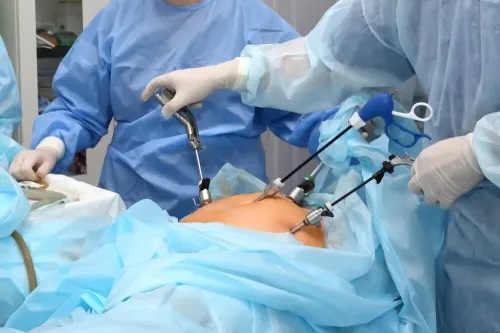
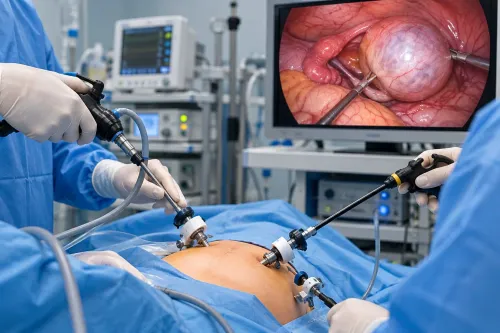
| Laparoscopic or robotic surgery | Removes selected external or intramural fibroids through small abdominal incisions | Size, number, depth and surgeon expertise make minimally invasive surgery appropriate |
| Open abdominal surgery | Removes fibroids through a larger incision | Very large, numerous or technically difficult fibroids |
| IVF without surgery | Bypasses some fertility barriers | Age, low ovarian reserve or other factors make delay costly |
Routine removal of a non-cavity-distorting intramural fibroid solely to improve fertility has less certain benefit. Discuss observation, a second opinion and IVF before choosing myomectomy for conception in Navi Mumbai.
For myomectomy for infertility caused by fibroids in Navi Mumbai, documented anatomy should guide the decision, not the ultrasound finding alone. Surgery can add delay, so compare its likely benefit against age, ovarian reserve, ovulation, tubal status, sperm factors, endometriosis and infertility duration.
What are the trade-offs before and after surgery?
Myomectomy for infertility caused by fibroids in Navi Mumbai is a trade-off, not a guaranteed route to pregnancy. The operation requires anaesthesia and can cause bleeding, infection, adhesions, postoperative pain and several weeks of recovery. Risk rises with fibroid size, number, depth and surgical route.
1. Bleeding can require a blood transfusion. Laparoscopic surgery can also require conversion to an open operation if visibility or control is inadequate. Uncontrolled emergency bleeding creates a small possibility of hysterectomy, even when preserving fertility is the intended plan; no surgeon can guarantee this outcome away in advance.
2. Adhesions can form around the uterus or fallopian tubes and create a new fertility problem. Ask how the team will reduce adhesion risk and what pain-control and activity restrictions apply after surgery.
3. Do not use one universal waiting period before trying to conceive. The recommendation depends on incision depth, whether the uterine cavity was entered, the number of fibroids removed and the operative report documenting the uterine repair.
4. Pregnancy after myomectomy carries a small risk of scar separation or uterine rupture, especially after a deep uterine-wall incision. Your obstetric team may recommend planned caesarean birth when the cavity was entered or the incision pattern is concerning.
Myomectomy removes existing fibroids but does not prevent new ones, so recurrence remains possible and pregnancy is not assured. Uterine-artery embolisation needs separate fertility counselling because reproductive outcomes are less certain than with a fertility-directed myomectomy.
How should you prepare for a fibroid fertility consultation in Navi Mumbai?
Bring the images, not only the reports: ultrasound and MRI images let the specialist review fibroid location and cavity distortion directly. Also bring:
- Written imaging reports and prior operative notes
- Your menstrual and conception history, including months trying
- Semen-analysis results
- Records of ovulation tracking or tubal-patency testing
Ask which fibroid is believed to affect fertility and what evidence shows that it distorts the endometrial cavity. Ask whether saline-infusion sonography or hysteroscopy is needed, how surgery could delay IVF, which route is proposed, and how the uterine scar could affect delivery planning.
| Route | Usually considered for | Appointment question |
|---|---|---|
| Hysteroscopic | A fibroid projecting into the cavity | Can it be removed through the cervix? |
| Laparoscopic or robotic | Selected intramural or external fibroids | What size, number and depth make this route suitable? |
| Open abdominal | Very large, numerous or technically difficult fibroids | How will recovery affect fertility timing? |
Parulekar Hospital can be one place in Navi Mumbai to discuss how fibroid findings interact with fertility assessment, pregnancy planning and obstetric follow-up. The decision should rest on documented anatomy and the couple’s wider infertility workup, including age, ovulation, ovarian reserve, tubes, endometriosis and sperm factors.
Myomectomy for conception in Navi Mumbai can help when a fibroid distorts the cavity, especially a submucosal fibroid. It is not automatically beneficial for every fibroid found during an infertility scan, so fibroid infertility treatment in Navi Mumbai should follow the evidence rather than the scan alone.
Frequently asked questions
How can you tell whether a fibroid is causing infertility?
A fibroid is more likely to affect fertility when it enters or distorts the endometrial cavity. Submucosal fibroids have the clearest association with implantation problems and miscarriage risk.
Which tests help assess fibroids affecting fertility?
Pelvic ultrasound identifies fibroid size and location. Tests that outline the uterine cavity, such as saline infusion sonography or hysteroscopy, help determine whether a fibroid distorts the cavity.
When is myomectomy for conception a reasonable choice?
Myomectomy is a reasonable option when a fibroid distorts the uterine cavity, causes symptoms, or has a clear position and size that could interfere with conception or pregnancy. The decision should account for age, ovarian reserve, other infertility factors, and surgical risks.
What should you consider before and after myomectomy?
Discuss bleeding, infection, scar tissue, recurrence, recovery time, and the possibility that future birth planning could change after surgery. Ask when to resume trying to conceive and whether a future pregnancy needs additional monitoring.
How should you prepare for a fibroid fertility consultation in Navi Mumbai?
Bring ultrasound or MRI reports, menstrual and conception history, previous fertility treatment records, medication details, and questions about surgery, recovery, and pregnancy timing.
Keywords