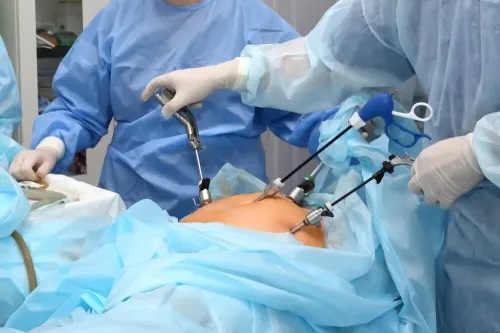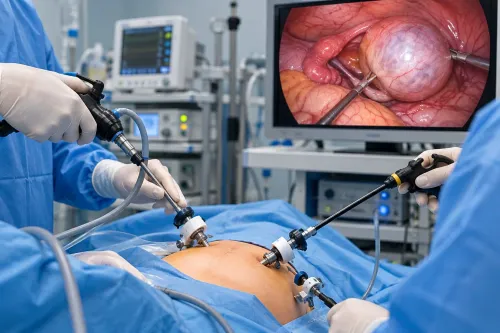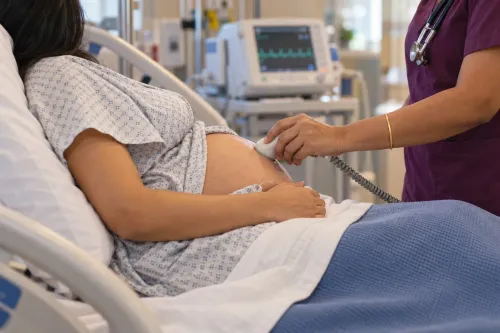

VBAC begins with more than a preference for vaginal birth: your previous uterine incision, current pregnancy, labour conditions and hospital resources all affect the plan. By the end, you will know which records to gather, what the assessment involves, how labour is monitored and when care changes to an emergency caesarean.
Key takeaways
- One previous low-transverse scar can support a planned trial of labour.
- Classical, high-vertical or uncertain uterine scars can change the birth plan.
- Your consultation reviews medical records, current pregnancy risks and emergency access.
- Labour requires continuous monitoring with caesarean backup available.
Who can be considered for VBAC, and which scars change the plan?
A planned trial of labour is usually considered after one previous low-transverse caesarean, provided no current condition requires caesarean birth. With spontaneous labour, the commonly quoted chance of vaginal birth is 72–76%.
A previous vaginal birth, especially a previous VBAC, improves that chance; a caesarean for labour dystocia, no previous vaginal birth, obesity, post-dates pregnancy or induction lowers it without automatically ruling out vaginal birth after cesarean care.
| Finding | Practical effect on the plan |
|---|---|
| One previous low-transverse uterine incision | Often supports planned VBAC after individual assessment |
| Classical vertical or T-shaped uterine incision | Planned labour is generally inappropriate |
| Previous uterine rupture or extensive surgery entering the uterine cavity | Planned labour is generally inappropriate |
| Multiple caesareans, large estimated fetal size, placenta praevia or major pregnancy complications | Requires specialist review and a personalised recommendation |
The team also reviews the earlier caesarean’s reason, your current health, pregnancy dating, fetal position and estimated size, placenta location and complications. The abdominal skin scar cannot show the uterine incision reliably.
If its type is unknown, contact the previous hospital’s medical-records department and request the caesarean operative report, discharge summary and anaesthesia record; do not rely on memory or scar direction. Ultrasound scar thickness is not a reliable pass–fail test because techniques and cutoffs vary.
VBAC treatment in Navi Mumbai should include a discussion of planned VBAC and repeat caesarean, with emergency capability available.
What happens at the first VBAC consultation in Navi Mumbai?
The first consultation assesses whether planned labour after caesarean is appropriate for this pregnancy and builds an individual plan. The VBAC care process in Navi Mumbai includes your history, examination, pregnancy dating, ultrasound findings and the details of the previous operation.
- The clinician reviews your medical and obstetric history, including the reason for the caesarean, previous vaginal births, complications and current medicines.
- A physical examination checks your general health, blood pressure and pregnancy findings.
- Pregnancy dating is confirmed from your last menstrual period, early scan and current gestational age.
- Ultrasound assesses fetal growth, position, wellbeing and the placenta’s location.
- The team reviews the uterine incision and operative details from your records.
- You discuss planned VBAC, planned repeat caesarean, warning signs and the hospital’s emergency arrangements.
Bring these documents:
- Previous discharge summary
- Caesarean operative report
- Anaesthesia record
- Antenatal reports
- Ultrasound reports
- Blood-group record
- Current medication list
A caesarean at another hospital does not prevent assessment. Missing records can leave the uterine incision type uncertain; the team may request them before finalising a plan or recommend repeat caesarean.
Lower-segment scar-thickness ultrasound is not a reliable pass–fail test because techniques and cutoffs vary. The decision combines the operative history, current findings and your preferences.
Placenta praevia or a low-lying placenta over the scar requires specialist imaging and preparation for placenta accreta spectrum, including blood-product planning.
How do planned VBAC and repeat caesarean compare?
A planned VBAC offers a chance to avoid another abdominal operation and recover faster after a successful vaginal birth. The trade-off is uncertainty: labour can fail, progress can stop, or fetal or maternal concerns can require an unplanned caesarean.
| Option | Main advantages | Main risks and trade-offs |
|---|---|---|
| Planned VBAC | Avoids surgery if successful; less wound pain and faster recovery; avoids adding another uterine scar | About 1 in 200 planned VBACs involve uterine rupture; failed labour can lead to emergency caesarean, haemorrhage, infection, transfusion, hysterectomy or anaesthetic complications; fetal compromise is possible |
| Planned repeat caesarean | Predictable timing; avoids labour and rupture during labour | Surgery brings bleeding, infection, blood clots, transfusion, anaesthetic complications and rare hysterectomy; newborn breathing problems can occur; each additional caesarean increases future placenta praevia and placenta accreta spectrum risk |
Induction is reserved for selected VBAC pregnancies because it raises failed-labour and rupture risks compared with spontaneous labour. A balloon catheter is generally preferred for cervical ripening; do not use misoprostol for term induction after a previous caesarean. Augmentation also increases rupture risk.
When comparing a VBAC hospital in Navi Mumbai, confirm:
- 24-hour obstetric and anaesthesia cover
- An immediately available operating theatre
- Blood-bank access
- Newborn-resuscitation capability
For VBAC treatment in Navi Mumbai, ask how the maternity and emergency teams coordinate these services. At Parulekar Hospital, ask specifically how its maternity, operating-theatre, blood-bank and newborn-resuscitation arrangements support a rapid change from labour to emergency caesarean when needed.
Related service
Obstetrics VBAC (Vaginal Birth After Cesarean) Treatment At Parulekar Hospital, we offer safe and carefully monitored VBAC (Vaginal Birth After Cesarean) for eligible mothers who wish to deliver naturally... View service → |
What happens when labour starts during VBAC care?
Call the maternity team exactly as your birth plan instructs, then come to hospital promptly when regular contractions begin or your waters break. The VBAC care process in Navi Mumbai starts with early triage, not with waiting at home to see whether labour becomes stronger.
1. On arrival, the team confirms your history, symptoms and vital signs, then admits you if labour is established or observation is needed. They insert an intravenous line and take blood samples, including blood group and a full blood count, so treatment and blood preparation are not delayed.
2. Staff assess contraction frequency, strength and pain, alongside your temperature, pulse and blood pressure. Vaginal examinations measure cervical dilation, while abdominal and ultrasound assessment, when needed, checks fetal position and descent.
3. Once active labour is established, continuous electronic fetal monitoring tracks the baby’s heart rate and contractions. An abnormal fetal heart-rate pattern is the most consistent early warning sign of a uterine-scar problem, but a normal trace cannot guarantee that rupture has not occurred.
4. Report constant abdominal pain, scar tenderness, vaginal bleeding, faintness or collapse, loss of fetal station, or sudden pain despite an epidural immediately. Epidural or other analgesia is not automatically prohibited during vaginal birth after cesarean care, but pain relief must not hide new warning signs.
If cervical dilation or fetal descent stops, or your condition or the baby’s condition becomes unsafe, the team changes from planned VBAC to emergency caesarean. Continuing the attempt is not safer than acting quickly.
What care follows a successful VBAC or an emergency change of plan?
After a successful vaginal birth after cesarean care continues with routine observation, not immediate discharge. Staff check your vital signs, vaginal bleeding, uterine contraction, pain, urination and signs of infection or anaemia. Tell them if pain increases, bleeding becomes heavier or you feel faint.
An emergency caesarean is not a failure of care. The team changes plan when fetal monitoring is abnormal, the cervix or baby is not progressing, or your condition makes vaginal birth unsafe. After surgery, ask about the reason, medicines, incision care and warning signs; after vaginal birth, ask about perineal stitches, bleeding and pain relief.
Before leaving, ask:
- Which symptoms require urgent review, and which number should you call at any hour?
- What medicines should you take, at what dose and for how long?
- How should you care for a caesarean wound or perineal tear, and when can you bathe?
- When is your postnatal and surgical follow-up appointment?
- Where should you go immediately if the emergency contact cannot be reached?
The previous uterine scar remains relevant after discharge. Seek immediate medical assessment for severe or persistent abdominal pain, faintness, heavy bleeding, fever or worsening weakness. A successful VBAC does not guarantee the same plan next time; each pregnancy needs a new assessment of the scar, placenta, maternal health and fetal health.
Frequently asked questions
Who can be considered for VBAC?
A planned trial of labour is usually considered after one previous low-transverse caesarean when no current condition requires caesarean birth. With spontaneous labour, the commonly quoted chance of vaginal birth is 72–76%.
Which uterine scars can change a VBAC plan?
A classical incision, a high vertical incision, multiple previous caesareans or an unknown scar history can change eligibility and require an individual obstetric review.
What happens at the first VBAC consultation in Navi Mumbai?
The consultation reviews your previous caesarean operative note, uterine incision, current pregnancy, placenta location, medical conditions and a plan for labour monitoring and emergency caesarean access.
How do planned VBAC and repeat caesarean compare?
Planned VBAC avoids abdominal surgery when successful but includes the possibility of emergency caesarean. A planned repeat caesarean offers a scheduled birth but involves surgical recovery and caesarean-related risks.
What happens when labour starts during VBAC care?
Contact your maternity team, go to the planned hospital and bring your pregnancy records. The team assesses labour and the baby, provides continuous monitoring and keeps caesarean backup available.
Keywords