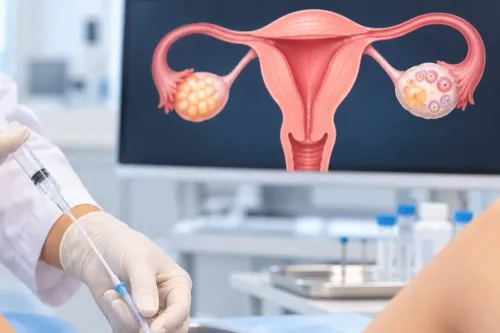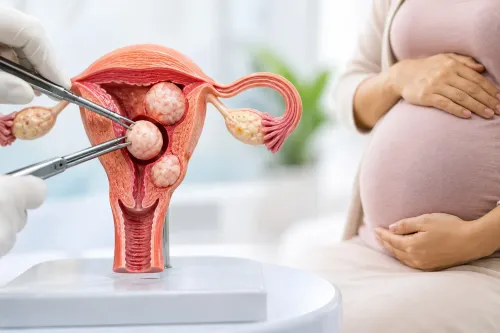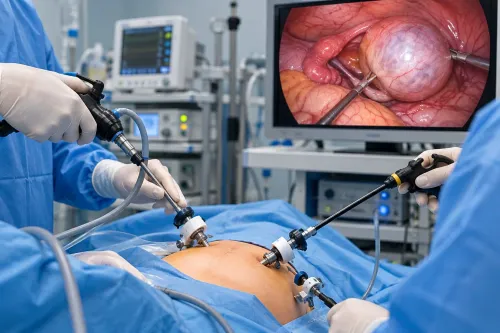
The same scan schedule does not suit every fertility cycle: IUI monitoring focuses on safe ovulation timing, while IVF monitoring guides medication changes, trigger timing and egg retrieval. You will be able to compare the process, visit burden, scan findings and clinic questions before choosing care in Navi Mumbai.
Key takeaways
- Baseline scans check cysts, fibroids, uterine lining and other treatment-changing findings.
- IUI monitoring targets ovulation timing while limiting the risk of multiple pregnancy.
- IVF monitoring guides medication changes and schedules egg retrieval before ovulation.
- Ask how scans, measurements, reports and urgent result reviews are handled.
From baseline scan to ovulation confirmation: how monitoring works
Monitoring starts with a baseline scan early in the menstrual cycle, before medication or timed treatment begins. It checks the ovaries and uterus for cysts, fibroids, lining appearance and other findings that could affect the plan. Serial pelvic scans then track each follicle’s side, number and diameter, along with endometrial thickness.
| Cycle approach | Usual monitoring pattern | What changes the schedule |
|---|---|---|
| Natural ovulation | Baseline scan followed by one or more scans | Follicle growth and the natural LH surge |
| Letrozole or clomiphene | Scan after tablets, then repeat scans | Response and number of developing follicles |
| Injectable medication | Closer, repeated scans, often with blood tests | Rapid growth or excessive ovarian response |
A transvaginal scan usually uses an empty or partly empty bladder. The covered ultrasound probe is inserted gently for a brief examination; pressure or mild discomfort is possible. Abdominal scanning is used when transvaginal imaging is unsuitable, but it can show less precise follicle detail.
Follicle diameter is an indirect maturity marker, not proof that an egg is mature or that ovulation occurred. Clinicians combine scan changes with:
- A spontaneous luteinizing-hormone surge
- Blood-test results
- A planned trigger protocol
- Follow-up evidence such as follicle collapse or pelvic fluid
A follicular monitoring process differs from an antral follicle count. Antral follicle count is an early-cycle ovarian-reserve assessment; serial scans track the current cycle. A fertility scan in Navi Mumbai should therefore include written follicle and lining measurements, not just a single image.
Follicular scan for IUI: timing ovulation without creating excessive risk
Monitoring differs by cycle type, and the scan result helps decide whether and when to inseminate. A follicular scan for IUI may start with a baseline scan early in the cycle, followed by one or more visits as a dominant follicle develops. There is no universal cycle day.
| Cycle type | Monitoring pattern | Timing decision |
|---|---|---|
| Natural-cycle IUI | Often fewer scans; follows the woman’s own follicle growth and LH surge | Insemination follows the clinic’s surge-based protocol |
| Letrozole or clomiphene IUI | Scans are scheduled according to response to tablets | The clinician decides whether and when to trigger or inseminate |
| Injectable gonadotrophin IUI | Closer review tracks rapid growth and the number of follicles | Proceed, adjust, or cancel based on response and safety |
Each scan records dominant follicle growth, the number of developing follicles, endometrial appearance and thickness, and whether ovulation is approaching. Follicle size matters, but size alone does not set the appointment: the clinician also considers growth over time, LH results, medication, lining findings and the clinic’s protocol.
Insemination may follow a spontaneous luteinizing-hormone surge or an hCG trigger. After hCG, ovulation is commonly expected around 36 to 48 hours later, but the treating clinic sets the insemination timing.
If several follicles mature, the clinician may cancel IUI or advise avoiding unprotected intercourse because multiple-pregnancy risk rises. A suitable-looking lining cannot predict implantation or pregnancy by itself. These decisions are central to follicular monitoring for IUI or IVF in Navi Mumbai.
Follicular monitoring for IVF: adjusting stimulation and scheduling retrieval
The baseline scan checks the uterus and ovaries before gonadotrophin stimulation begins. It identifies cysts, records the starting ovarian appearance and antral follicles, and establishes the endometrium before medication changes the cycle. This is different from serial follicular monitoring, which follows the current stimulated cycle.
Repeated transvaginal scans assess the whole follicle cohort, not just the largest follicle. Each visit records follicle count, side, distribution, diameters, growth consistency, ovarian response and endometrial development. Estradiol and other blood tests are added when the protocol requires them; the combined results guide gonadotrophin dose changes and the timing of the next visit.
| Finding | Decision it can influence |
|---|---|
| Follicle count and distribution | Whether the response is too low, appropriate or excessive |
| Growth consistency and estradiol | Medication adjustment and timing of further monitoring |
| Cohort response and endometrium | Final maturation trigger planning |
The trigger is chosen from the overall response, not one follicle measurement. Egg retrieval then follows the clinic’s specified trigger-to-retrieval interval, so taking the trigger late can disrupt scheduling. Follicle diameter is only an indirect maturity marker; it cannot guarantee a mature, fertilisable or chromosomally normal egg.
A very high response raises ovarian hyperstimulation syndrome risk. The team may reduce or stop medication, use a different trigger, freeze embryos for later transfer or cancel in selected circumstances. These decisions form part of follicular monitoring for IUI or IVF in Navi Mumbai, although IVF requires the more intensive surveillance.
How many scans will you need, and what do the measurements really mean?
Natural-cycle IUI often needs fewer appointments than stimulated IUI; IVF usually requires the most. Your follicular monitoring process may include early-morning visits for ultrasound, blood tests, medication decisions, insemination, or egg retrieval on the same day.
| Option | Visit burden | Why results change the plan |
|---|---|---|
| Natural-cycle IUI | Often fewer scans | Tracks spontaneous follicle growth and an LH surge |
| Stimulated IUI | Closer review | Letrozole, clomiphene, or injections can produce several follicles quickly |
| IVF | Most visits | Scans and hormone tests guide doses, trigger selection, retrieval timing, and OHSS prevention |
A fertility scan in Navi Mumbai should record follicle number, side, and diameter, plus endometrial thickness. A growing follicle shows ovarian response, not egg quality; several follicles can increase the treatment opportunity but also the risk of multiple pregnancy in IUI.
A documented lining thickness cannot predict implantation, and a large follicle does not prove ovulation.
Ask how the clinic handles a missed scan, because delayed review can affect trigger, insemination, or retrieval timing. Early appointments matter when medication changes or procedures depend on same-day results.
After stimulation, seek prompt clinical advice for severe abdominal pain or swelling, persistent vomiting, breathlessness, faintness, reduced urine output, or rapid weight gain. These symptoms can signal significant OHSS or another complication.
Choosing a monitoring service in Navi Mumbai: questions that reveal the real difference
A low scan count does not mean better care. Compare how quickly results become treatment decisions, especially for follicular monitoring for IUI or IVF in Navi Mumbai.
| Question | IUI | IVF |
|---|---|---|
| What is included? | Transvaginal imaging when appropriate, follicle count and size, lining thickness, and specialist review | Serial transvaginal scans tracking the whole follicle cohort, lining, and ovarian response |
| What changes the plan? | Too many mature follicles may lead to cancellation or advice to avoid unprotected intercourse; ask how spontaneous LH surges and hCG timing are handled | Ask how estradiol results change gonadotrophin doses, and when high response prompts a different trigger, embryo freezing, or cancellation |
| What timing support exists? | Early appointments and urgent review for insemination timing | Early appointments and urgent review for trigger and egg-retrieval timing |
Ask these operational questions before booking:
- Who performs the scan, who interprets it, and does the treating fertility specialist review it?
- Does the quoted fertility scan in Navi Mumbai include written measurements of every relevant follicle and the endometrium?
- Are same-day estradiol or other blood tests available, and how are urgent results communicated?
- What happens if you miss a scan or a follicle count crosses the clinic’s IUI cancellation threshold?
You can assess Parulekar Hospital alongside other Navi Mumbai providers using these safety and workflow questions, not scan count alone. Request the full expected schedule, fees, medication and appointment instructions before starting.
Related services
Fertility (IVF / ART) Follicular Monitoring is a simple ultrasound-based procedure used to track the growth and development of ovarian follicles during a menstrual cycle. View service → |
Fertility (IVF / ART) IVF (In Vitro Fertilization) and ICSI (Intracytoplasmic Sperm Injection) are advanced fertility treatments designed to help couples achieve... View service → |
Frequently asked questions
What happens during the follicular monitoring process?
Monitoring begins with a baseline scan early in the cycle, followed by serial pelvic ultrasounds. The team records each follicle’s ovary, number and diameter, along with endometrial thickness, then uses the results to plan treatment timing.
What does a follicular scan for IUI measure?
A follicular scan for IUI tracks follicle growth and the uterine lining so ovulation or an ovulation trigger can be timed. Monitoring also helps limit excessive follicle development and the associated risk of multiple pregnancy.
How does follicular monitoring for IVF differ from IUI monitoring?
IVF monitoring follows multiple follicles during ovarian stimulation. Scan measurements help clinicians adjust medication and schedule egg retrieval before spontaneous ovulation.
How many fertility scans in Navi Mumbai will you need?
The number depends on your medication plan, follicle growth and treatment response. You begin with a baseline scan and continue with serial scans until the timing decision for IUI or egg retrieval is clear.
Related services
Fertility (IVF/ART) IUI (Intrauterine Insemination) Treatment IUI is a simple and effective fertility treatment where healthy, processed sperm is directly placed into the uterus during ovulation to increase the... View service → |
Fertility (IVF / ART) Frozen Embryo Transfer (FET) is an advanced fertility procedure where previously frozen embryos are carefully thawed and placed into the uterus to... View service → |
Fertility Support Embryo Freezing (Cryopreservation) Embryo freezing is an advanced fertility preservation technique in which healthy embryos are carefully frozen and stored for future use. View service → |
Diagnostics Ultrasound imaging at Parulekar Hospital is a safe, non-invasive diagnostic procedure that uses sound waves to create detailed images of internal... View service → |
Keywords