Irregular periods do not automatically rule out IUI: the decisive issue is whether your ovaries release an egg, or can be helped to release one safely and predictably. By the end, you will know which medical findings support IUI, how treatment is monitored, and when another fertility approach makes more sense.
Key takeaways
- Irregular cycles do not rule out IUI if ovulation can be confirmed or triggered.
- Semen analysis, tubal testing, ovarian reserve, and hormone checks guide eligibility.
- Ultrasound and hormone testing determine when the IUI procedure should occur.
- Discuss IVF when repeated stimulated IUI cycles do not produce pregnancy.
Irregular ovulation is different from not ovulating
Long, unpredictable, or widely spaced cycles do not by themselves rule out IUI: the key question is whether you ovulate intermittently or do not ovulate at all. Some women with PCOS, thyroid disease, hyperprolactinaemia, low ovarian reserve, or major weight-related hormonal disruption release an egg occasionally; others have anovulation and release no egg without treatment.
The cause matters because it changes medication choice, timing, and the likelihood that IUI will be useful:
- PCOS may respond to ovulation induction, often with letrozole; IUI is not automatically better than well-timed intercourse.
- Thyroid disease or hyperprolactinaemia may need correction before fertility treatment.
- Low ovarian reserve or substantial weight-related hormonal disruption may require a different plan and counselling about treatment response.
The first decision is whether medication can produce a mature follicle and ovulation predictably, not whether your menstrual calendar looks regular. Ultrasound monitoring and, when appropriate, an hCG trigger help time insemination. IUI places processed sperm in the uterus; it cannot make an egg mature when ovulation induction has failed.
IUI for irregular ovulation in Navi Mumbai can be reasonable when ovulation is reliably induced and other requirements are met, but the diagnosis—not the city or cycle length—determines its likely value.
The checks that determine IUI eligibility
The checks for IUI eligibility for women in Navi Mumbai begin with four findings: at least one open fallopian tube, a uterus capable of carrying a pregnancy, an ovulatory response to medication when needed, and enough processed sperm for insemination.
| Finding | How it is assessed | Practical consequence |
|---|---|---|
| Open tube | Hysterosalpingography or HyCoSy | Bilateral blockage usually directs treatment to IVF |
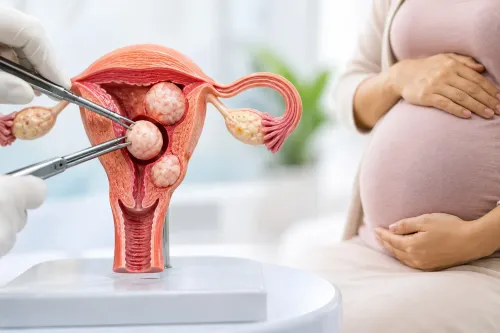
| Uterine capacity | Pelvic ultrasound and other imaging when indicated | Polyps, fibroids or cavity problems may need treatment first |
| Ovulatory response | Menstrual and ovulation history, scans, and hormone tests | Failed induction makes IUI unsuitable for that cycle |
| Semen adequacy | Semen analysis and post-processing sperm assessment | Severe male-factor infertility may require IVF with ICSI |
Assessment may also include a pregnancy test when appropriate, thyroid-stimulating hormone, prolactin, and ovarian-reserve testing such as anti-Müllerian hormone or antral follicle count. A normal result does not guarantee success; it shows whether the basic conditions for IUI exist.
Age, ovarian reserve, uterine health and the cause of irregular ovulation change the recommendation. Severe endometriosis or significant tubal disease can make IUI a poor fit, while reduced reserve or older reproductive age may justify discussing IVF sooner. A clinic must provide ultrasound monitoring and emergency support during stimulation.
How doctors create and confirm ovulation in an irregular cycle
A calendar cannot reliably time treatment when ovulation is irregular, so clinicians use medication and monitoring to identify the fertile window.
Medication choice depends on the cause of anovulation, your previous response, age, ovarian reserve and medical history. Options include letrozole, clomiphene citrate and injectable gonadotropins.
- Begin with the selected ovulation-induction medicine at the prescribed dose.
- Attend repeated transvaginal scans rather than relying on one cycle-day prediction. Scans track follicle growth, identify a mature follicle, often around 18–22 mm, and assess endometrial lining development.
- Add urine or blood luteinising-hormone testing when appropriate. A positive surge can help estimate ovulation, but an hCG trigger injection may be used when a follicle is ready to provide more predictable timing.
- Plan IUI close to expected ovulation, after aiming for one or a small number of mature follicles.
For IUI for ovulation problems in Navi Mumbai, the practical principle is the same: monitoring determines timing, not the calendar. If too many follicles develop, the clinician may withhold the trigger or cancel the cycle because multiple pregnancy and ovarian hyperstimulation risks increase.
A patient with PCOS may first receive ovulation induction with timed intercourse. When no other infertility factor exists, adding IUI is not automatically more effective than intercourse timed after confirmed ovulation, so the treatment choice depends on the couple’s findings and prior response.
What stimulation risks and IUI day actually involve
A monitored cycle uses medication, ultrasound scans and dose adjustments to limit the response. Too many developing follicles raise the chance of twins, triplets or higher-order pregnancy; excessive stimulation can also cause ovarian hyperstimulation syndrome (OHSS), with fluid shifts, abdominal swelling and other complications.
Scan findings determine whether treatment continues safely. If too many follicles develop, follicles grow unevenly, or the response suggests an unsafe risk, the clinician may withhold the hCG trigger or cancel the cycle. Do not proceed with repeated stimulated-IUI cycles without monitoring.
- You follow the prescribed medication schedule and attend transvaginal scans. Ask how dose changes will be communicated and which follicle findings trigger cancellation.
- You provide a semen sample, following the clinic’s instructions about collection location, abstinence, timing and transport.
- The laboratory washes the sample, removes seminal fluid and concentrates the most useful motile sperm.
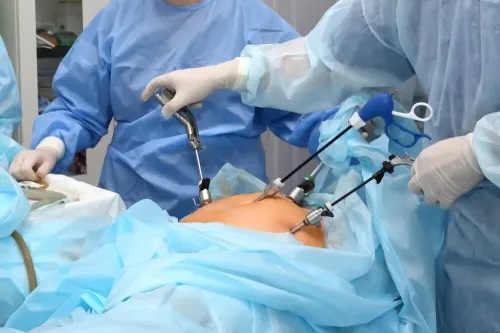
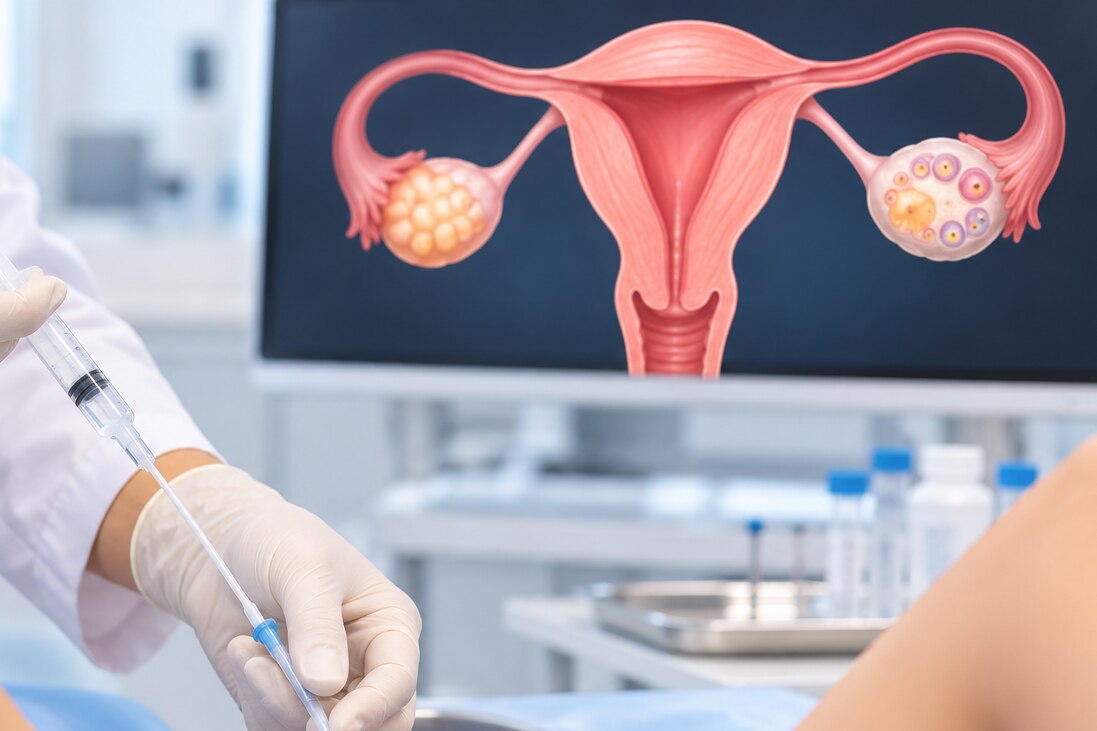
- During IUI, a clinician passes a soft catheter through the cervix and places the prepared sperm inside the uterus. The procedure is usually brief, and routine cases generally do not need anaesthesia.
Mild cramping or light spotting can follow. Seek urgent medical advice for severe pain, marked abdominal swelling, breathing difficulty or reduced urination.
Confirm medication timing, semen-collection instructions, anaesthesia policy and post-procedure advice with the treating clinic. Take a pregnancy test about two weeks later: testing sooner can detect hCG from the trigger injection and create a false-positive result.
When IUI is a sensible next step—and when to change course
Continuing IUI is worthwhile only when treatment produces a mature follicle, at least one usable tube is open, and the processed semen sample is adequate. Outcomes also depend on age, diagnosis, sperm count after processing, tubal status, ovarian reserve, mature follicle number and whether induction succeeded.
Clinic success rates cannot be compared unless they use the same pregnancy definition and patient group. A positive test, an ultrasound-confirmed pregnancy and a live birth are different measures.
IUI does not reverse age-related egg-quality decline. Reduced ovarian reserve, older reproductive age or repeated unsuccessful cycles may justify discussing IVF earlier. Severe endometriosis, major tubal disease, severe male-factor infertility or a need for preimplantation genetic testing can make IUI a poor fit and redirect treatment toward surgery, IVF or IVF with ICSI.
Living in Navi Mumbai creates no separate medical eligibility category. The practical issue is access to proper ultrasound monitoring and emergency support. Before consenting to iui treatment for irregular cycles in Navi Mumbai, ask Parulekar Hospital:
- Which medication will you use, and how many scans are planned?
- What follicle number or size will trigger cancellation?
- What processed semen count qualifies for IUI?
- How many cycles do you recommend before reviewing IVF?
- Do your success figures mean a positive test, clinical pregnancy or live birth?
A clear answer to these questions helps you judge whether another monitored cycle offers a reasonable benefit or only delays a better-suited treatment.
Related services
Fertility (IVF/ART) IUI (Intrauterine Insemination) Treatment IUI is a simple and effective fertility treatment where healthy, processed sperm is directly placed into the uterus during ovulation to increase the... View service → |
Fertility (IVF / ART) IVF (In Vitro Fertilization) and ICSI (Intracytoplasmic Sperm Injection) are advanced fertility treatments designed to help couples achieve... View service → |
Frequently asked questions
Can women with irregular ovulation benefit from IUI?
Yes. IUI can help when you ovulate intermittently or a doctor can induce and confirm ovulation. IUI is not suitable as a standalone treatment for untreated anovulation.
What tests determine IUI eligibility for women in Navi Mumbai?
Evaluation commonly includes semen analysis, transvaginal ultrasound, ovulation and hormone testing, ovarian reserve assessment, and testing whether at least one fallopian tube is open.
How do doctors time IUI treatment for irregular cycles?
Doctors monitor follicle growth with transvaginal ultrasound and may use medication to stimulate development. They confirm or trigger ovulation, then schedule IUI around egg release.
When should you change from IUI to another fertility treatment?
Consider changing course after repeated well-timed cycles without pregnancy, poor ovarian response, blocked tubes, severe sperm-factor infertility, or a condition for which IVF offers a better chance.
Related services
Fertility (IVF / ART) Follicular Monitoring is a simple ultrasound-based procedure used to track the growth and development of ovarian follicles during a menstrual cycle. View service → |
Gynaecology PCOS (Polycystic Ovary Syndrome) treatment focuses on balancing hormones, regulating periods, and improving overall reproductive health. View service → |
Gynaecology at Parulekar Hospital involves a thorough assessment to identify the cause of difficulty in conceiving. View service → |
Keywords