An unsuccessful IVF cycle can mean no implantation, a biochemical pregnancy, miscarriage, a cancelled transfer, or no usable embryos left—not one single outcome. By the end, you will know when a frozen transfer is possible, how doctors choose it over another fresh cycle, what preparation involves, and which questions to ask before proceeding.
Key takeaways
- Confirm whether vitrified embryos remain before planning another transfer.
- Ask why the previous cycle failed before choosing FET or fresh IVF.
- Check how the clinic prepares the uterine lining and monitors ovulation.
- Request clear details on embryo thawing, transfer timing, and follow-up testing.
What an unsuccessful IVF cycle means—and whether frozen transfer is possible
An unsuccessful IVF cycle can mean that no embryo implanted, a biochemical pregnancy ended soon after a positive test, a miscarriage occurred, no usable embryo remained, or the cycle was cancelled before transfer. These outcomes do not all point to the same next step.
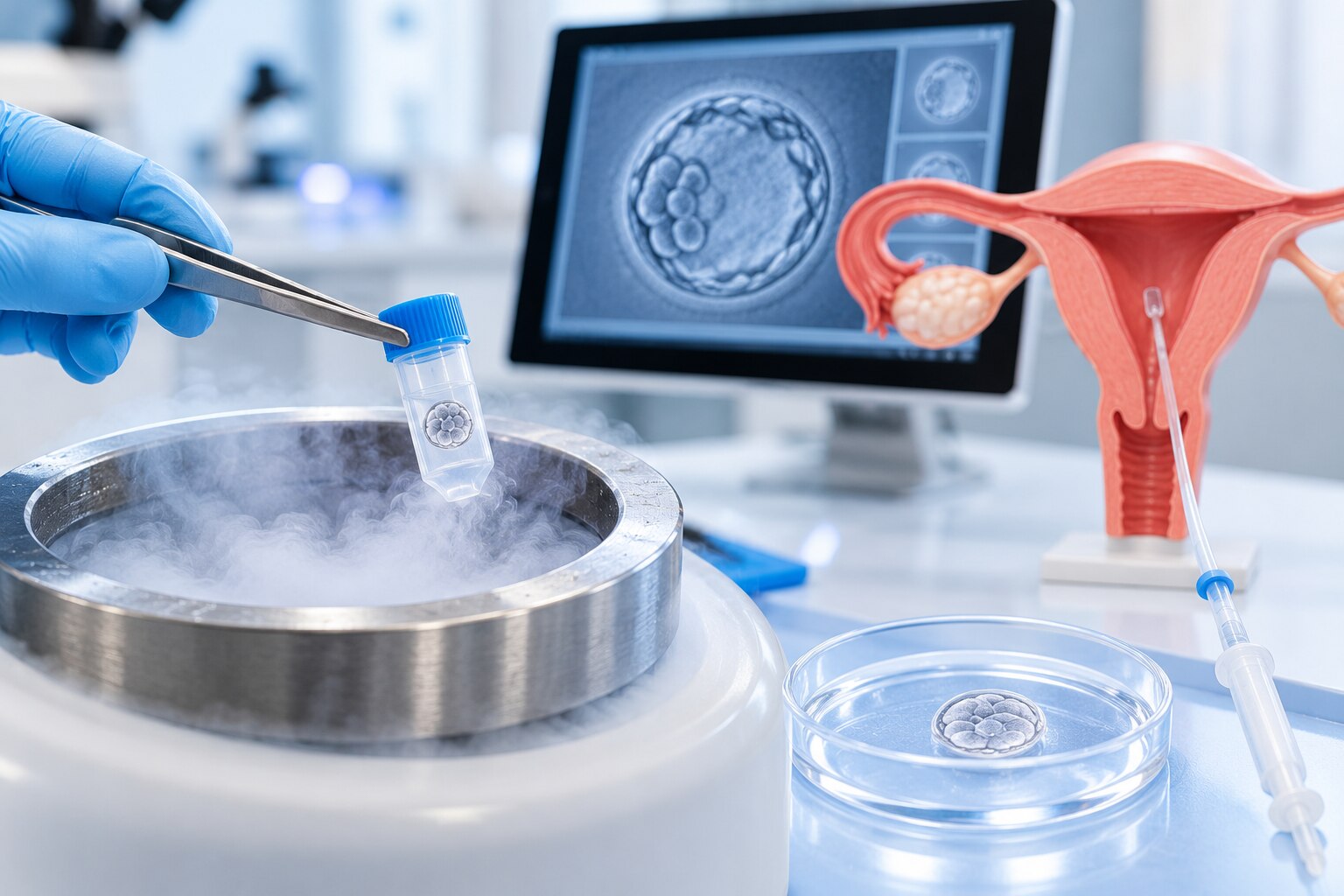
Frozen embryo transfer after unsuccessful IVF in Navi Mumbai is an option only when embryos from that or an earlier cycle were created and cryopreserved. The clinic must confirm:
- The number of embryos in storage, their developmental stage and quality
- Embryo identity, consent and storage records
- That each selected embryo survived thawing
- A review of the uterine cavity, endometrial development, hormone results and the reason for the previous outcome
| Option | What it involves | When it may fit |
|---|---|---|
| Frozen embryo transfer | Thawing and transferring an embryo already stored | Suitable embryos remain and the uterus and health are ready |
| Another stimulation cycle | Ovarian medicines, egg collection and embryo creation again | No embryos remain, stored embryos are unsuitable, or new sperm, ovarian, genetic or medical concerns need attention |
A failed transfer alone does not prove a uterine problem, immune disorder or genetic incompatibility. Ask for a review of the embryo and transfer records before paying for add-on tests.
FET avoids another egg-collection procedure, but it is not guaranteed to work; age when eggs were collected, embryo quality, number transferred and infertility cause shape the individualized estimate.
When doctors recommend FET instead of another fresh IVF cycle
Doctors usually recommend FET after failed IVF in Navi Mumbai when a suitable embryo remains frozen and the uterus and hormone profile are ready for transfer. This avoids another round of ovarian-stimulation medicines and egg collection. It also lets you postpone transfer while recovering from complications or investigating why the previous cycle failed.
The decision review includes:
- Embryo availability: confirm the number stored, developmental stage, grading, identity records, storage conditions, and the clinic’s thawing plan.
- Egg age: success estimates depend strongly on your age when the eggs were collected, not only your age on transfer day.
- Ovarian reserve and sperm factors: low reserve, poor fertilisation, or severe sperm abnormalities may favour another stimulation cycle to create more embryos.
- Uterine findings: fibroids, polyps, adenomyosis, scar tissue, or an abnormal cavity scan may require treatment before transfer.
- Endometrial thickness and hormone results: a thin lining or poorly timed progesterone can make immediate FET unsuitable.
- The previous outcome: failed implantation, biochemical pregnancy, miscarriage, or a cancelled transfer each requires a different review.
Another fresh IVF cycle becomes more sensible when no embryos remain, thawing leaves no transferable embryo, embryo quality is poor, or testing identifies a genetic, endocrine, uterine, or medical issue that needs correction. FET is an option, not an automatic next step.
Your clinic should compare both pathways using your records rather than quote a single Navi Mumbai success rate.
How the uterus and cycle are prepared for a frozen transfer
A failed transfer leads to a review before medication starts. The clinician checks whether embryos remain stored, their developmental stage and grading, the transfer record, uterine anatomy, endometrial thickness, hormone results, and whether ovarian hyperstimulation affected the original cycle.
Confirm the embryo identity and storage documentation; the laboratory will also record whether each embryo survives thawing.
The cycle plan depends mainly on ovulation and menstrual regularity:
| Option | Preparation | Progesterone timing |
|---|---|---|
| Natural or modified-natural cycle | Ultrasound tracks follicle growth and endometrium; an hCG trigger may schedule ovulation | Start progesterone after confirmed or triggered ovulation |
| Hormone-replacement cycle | Oestrogen builds the lining while ovulation is absent, irregular, or deliberately suppressed; ultrasound checks development | Start progesterone only when the lining and hormone plan are ready |
Once the endometrium is suitable, the clinic schedules transfer to match progesterone exposure with the embryo’s developmental age. A day-5 blastocyst, for example, is transferred after the clinic’s specified duration of progesterone, not simply on a convenient calendar date.
Take the first dose at the recorded time and report missed doses immediately; incorrect timing can leave the lining biologically out of sync even when its thickness looks adequate.
For many patients, the benefits of frozen embryo transfer in Navi Mumbai include avoiding another stimulation-and-egg-collection procedure, reducing exposure to ovarian-stimulation medicines, and allowing recovery from illness, surgery, or ovarian hyperstimulation before transfer.
What happens on transfer day and during the waiting period
On transfer day, arrive with the bladder filled as instructed; a moderately full bladder helps the clinician see the uterus on ultrasound. After confirming your identity and embryo details, the laboratory warms the selected embryo and reports whether it survived.
The clinician guides a thin catheter through the cervix and releases the embryo into the uterus under ultrasound guidance. The procedure usually takes a few minutes, and anaesthesia is not usually needed.
Afterward, walk, use the bathroom, and return to ordinary light activities unless your clinic gives different instructions. Bed rest does not improve implantation. Avoid strenuous exercise and follow specific advice about sex, travel, or work. Continue progesterone and estrogen exactly on schedule; missing doses can affect the prepared uterine lining.
Do not stop them because of bleeding or because you feel no symptoms.
Mild cramps, pelvic heaviness, or light spotting can occur and do not prove that implantation has or has not happened. A frozen transfer after an unsuccessful IVF cycle in Navi Mumbai still requires the scheduled pregnancy blood test, usually 9 to 14 days after transfer; testing earlier can mislead you, especially after an hCG trigger.
Contact the clinic urgently for heavy bleeding, severe or one-sided pain, fainting, breathlessness, fever, or rapidly increasing abdominal swelling. A negative home test or new symptoms should prompt a call, not self-directed medicine changes.
Questions to ask before choosing a Navi Mumbai fertility clinic for FET
Ask for the records before agreeing to frozen embryo transfer after unsuccessful IVF in Navi Mumbai. Confirm that embryos remain stored, the storage tank and identification records match your consent documents, and the laboratory can provide its own post-warming survival rate.
A clinic should also explain your individualized chance based on age when eggs were collected, embryo stage and quality, number transferred, infertility cause, and the previous cycle’s outcome.
- Which embryos remain, and what are their day of development, grading, freezing date, and identification numbers?
- What happened during fertilisation, embryo culture, transfer, and the failed cycle, including endometrial thickness and hormone results?
- What is the plan for a natural or hormone-replacement cycle, progesterone start date, transfer date, and pregnancy-test date?
- What are the risks of cancelled preparation, failed warming, multiple pregnancy, ectopic pregnancy, miscarriage, and medication side effects?
- Why does the clinic recommend FET rather than another stimulation cycle, and what finding would change that decision?
- If an add-on such as immune therapy, endometrial scratching, or a commercial implantation test is proposed, what evidence and patient-specific indication support it?
| Confirm | Why it matters |
|---|---|
| Written thawing and transfer policy | A thawed embryo can fail to re-expand and become unsuitable for transfer. |
| Named follow-up contact and emergency number | You need help for heavy bleeding, severe pain, or medication errors. |
| Review appointment and ultrasound plan | Results determine whether treatment continues or changes. |
Parulekar Hospital can be compared on whether its consultation gives you these records, decisions, and follow-up arrangements rather than quoting a single success rate. The benefits of frozen embryo transfer in Navi Mumbai include avoiding repeat stimulation and egg collection, but FET is not guaranteed.
Related service
Fertility (IVF / ART) Frozen Embryo Transfer (FET) is an advanced fertility procedure where previously frozen embryos are carefully thawed and placed into the uterus to... View service → |
Frequently asked questions
What does an unsuccessful IVF cycle mean for frozen embryo transfer?
It can mean failed implantation, a biochemical pregnancy, miscarriage, no usable embryo, or cancellation before transfer. FET is possible only when a suitable embryo remains frozen and the medical team considers transfer appropriate.
When might a doctor recommend FET instead of another fresh IVF cycle?
A doctor may recommend FET when suitable embryos are already frozen and another egg-collection cycle is unnecessary. The decision also depends on uterine readiness, hormone levels, the reason for the previous outcome, and your overall treatment plan.
How is the uterus prepared for a frozen embryo transfer?
Preparation may use a natural cycle with ovulation monitoring or a medicated cycle using oestrogen followed by progesterone. Ultrasound scans and hormone assessment help determine when the lining and transfer timing are suitable.
What happens on frozen embryo transfer day and during the waiting period?
The clinic thaws a selected embryo, confirms its condition, and places it through the cervix using a thin catheter. Follow prescribed medicines, avoid changing treatment without advice, and take the pregnancy test on the date the clinic gives you.
What should you ask a Navi Mumbai fertility clinic before choosing FET?
Ask about embryo storage and thawing procedures, transfer success factors, monitoring, medication costs, emergency access, pregnancy-test timing, and what happens if the transfer is unsuccessful.
Keywords